Kata supérieur avec partenaire
A partner kata turns technique into a living demonstration of combat.
Kata supérieur avec partenaire
This kata follows the same fundamental structure as Kata supérieur, but is performed with partners positioned in front of the practitioner. A foam nunchaku (soft plastic) is used for safety. The form is ideally performed with two partners (one partner is possible but requires specific adaptations).
In this execution, practitioners learn to evade, block, and counter in real time against multiple opponents. Key elements include timing, distance management in relation to the partners, and adapting to the sometimes unexpected resistance caused by blocks or contact with an opponent. This resistance affects the trajectory and recovery of the nunchaku and demands constant awareness and control.
An essential aspect of this kata is learning to work together with partners and to study different combat situations from multiple perspectives: both as the main performer and as one of the partners. A successful execution is only possible when all practitioners are well attuned to one another. Timing, precision, and teamwork are fundamental requirements.
A higher-level challenge is performing this kata using wooden nunchaku, which requires advanced control, responsibility, and mutual trust.
Kata supérieur avec partenaire is also highly suitable for demonstrations, including performances set to music.* The names of the techniques can be found under Kata supérieur. The illustrations accompanying this form provide a general guideline for execution and are not binding, as long as the structure and essence of Kata supérieur remain clearly visible. Choreographic adaptations and partner techniques are free to vary.
In karate terminology, this practice is known as bunkai: the practical interpretation of a kata, where the form represents an imaginary fight. Training in this way greatly enhances Kata supérieur (without partners), as the techniques gain deeper understanding, intent, and realistic expression.
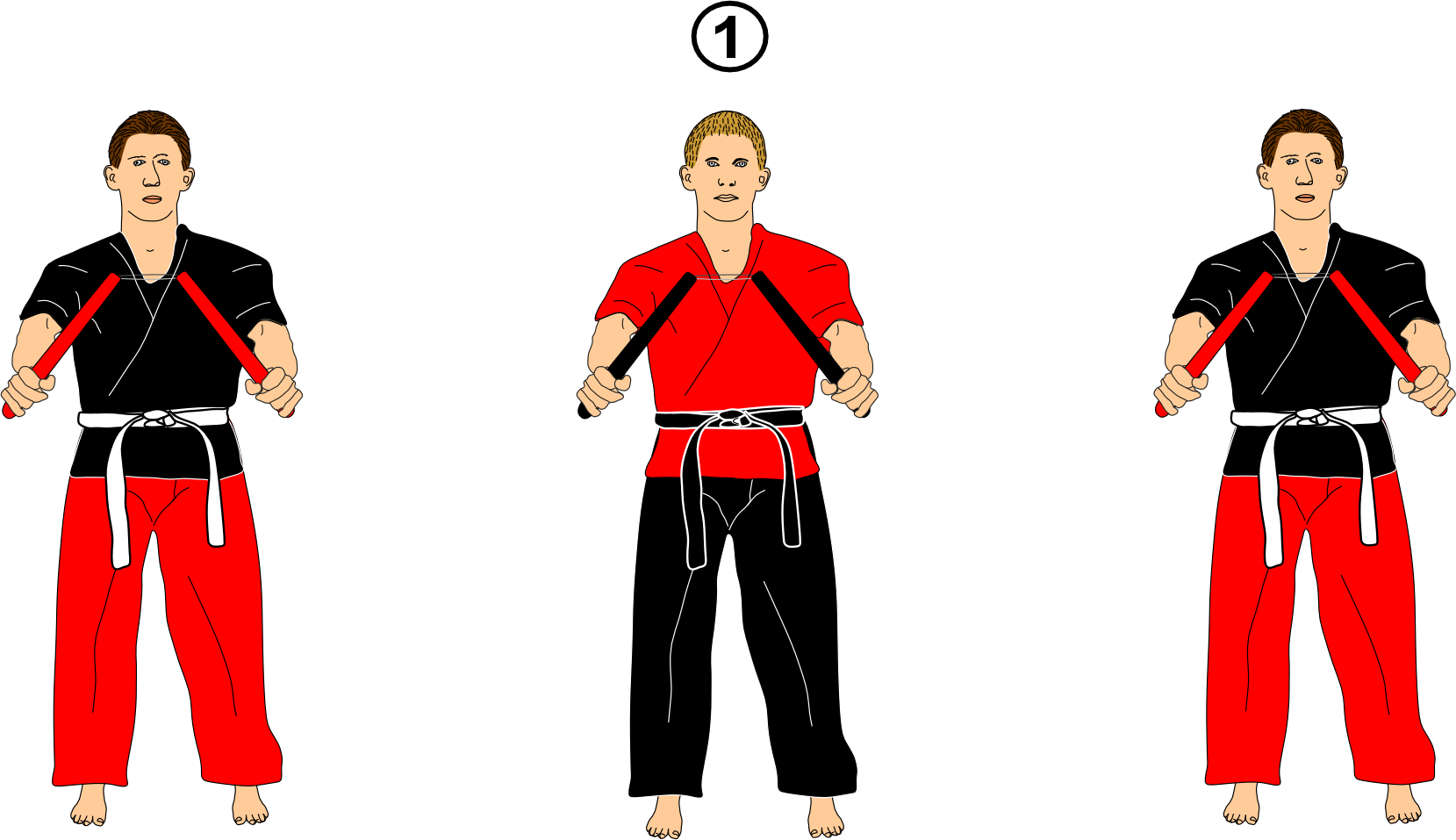
1. Presentation and salute with the partners of the Kata supérieur performance.
Kata supérieur avec partenaire
Kata supérieur with partner(s)
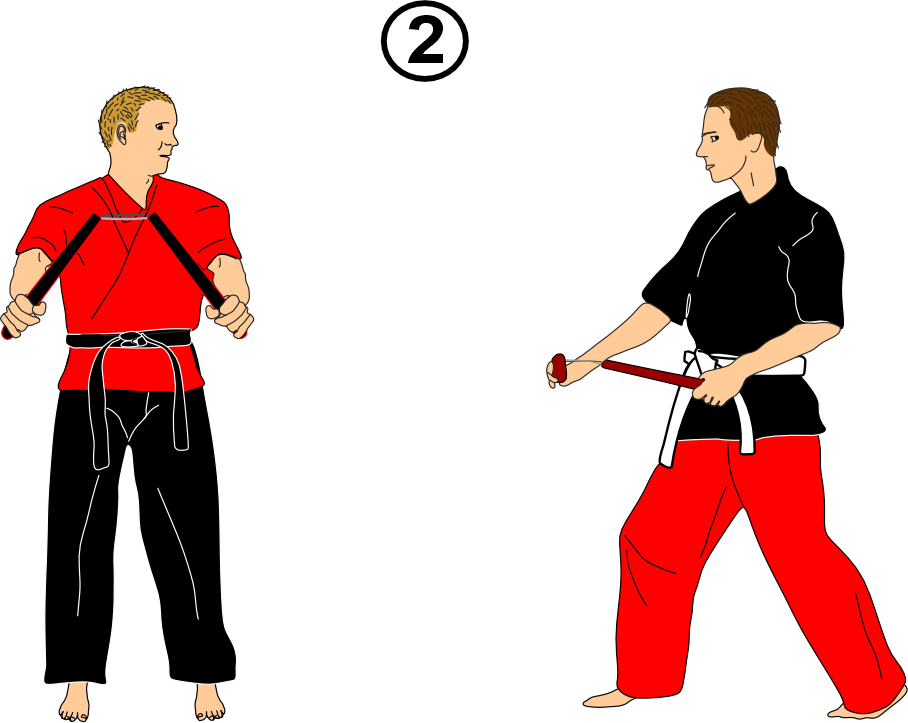
2. You look and see the first partner (opponent) approaching too closely.
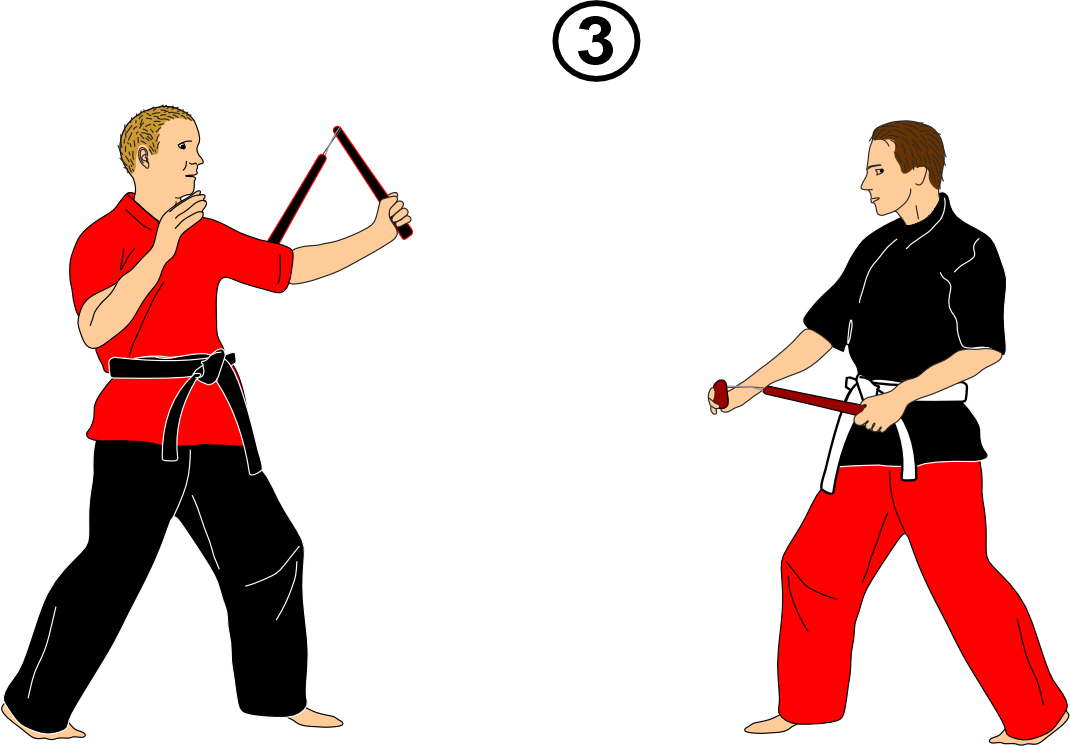
3. You keep him at a distance.
4. The opponent retreats.
5. The opponent delivers a horizontal strike.
6. You evade.
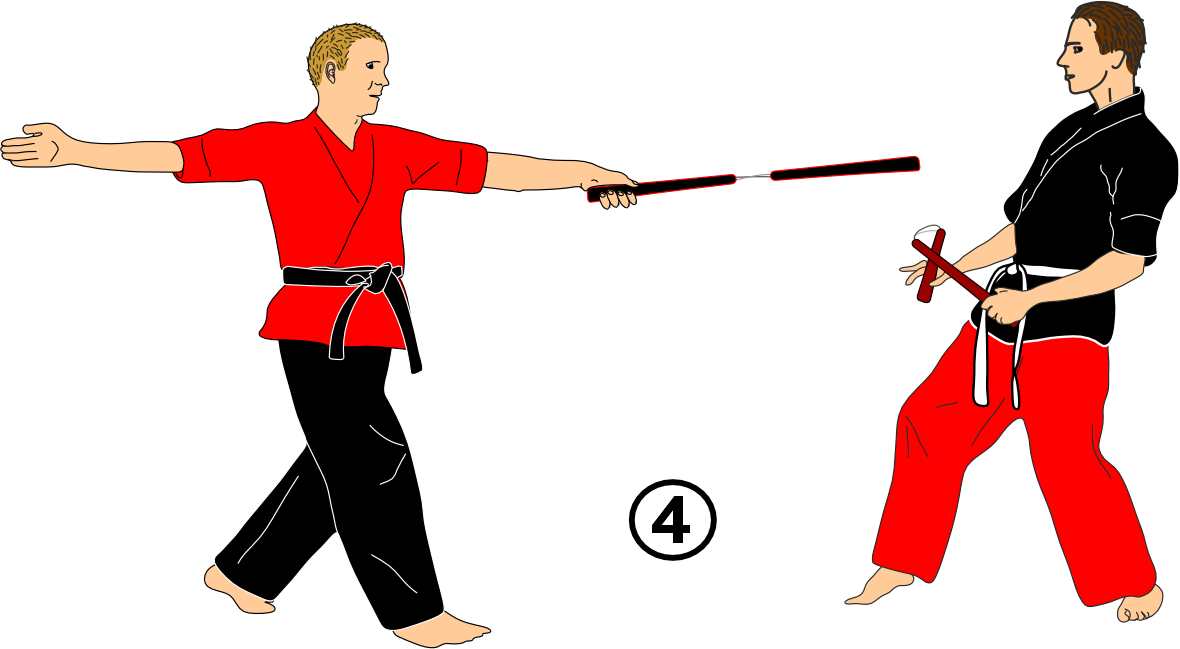
7. You rise with a strike; the opponent evades your attack.
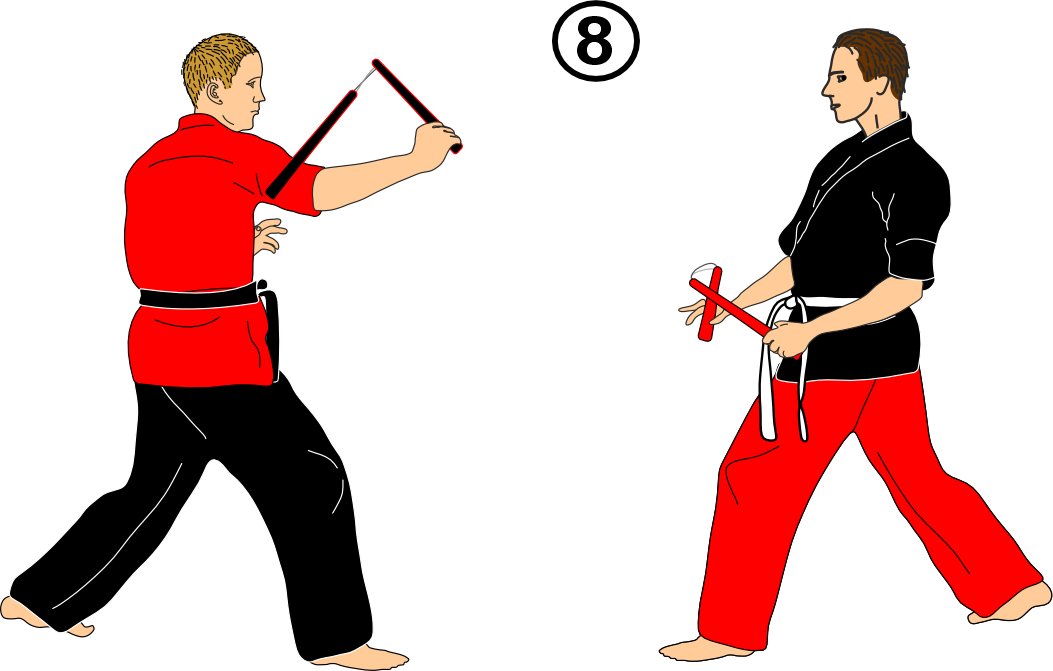
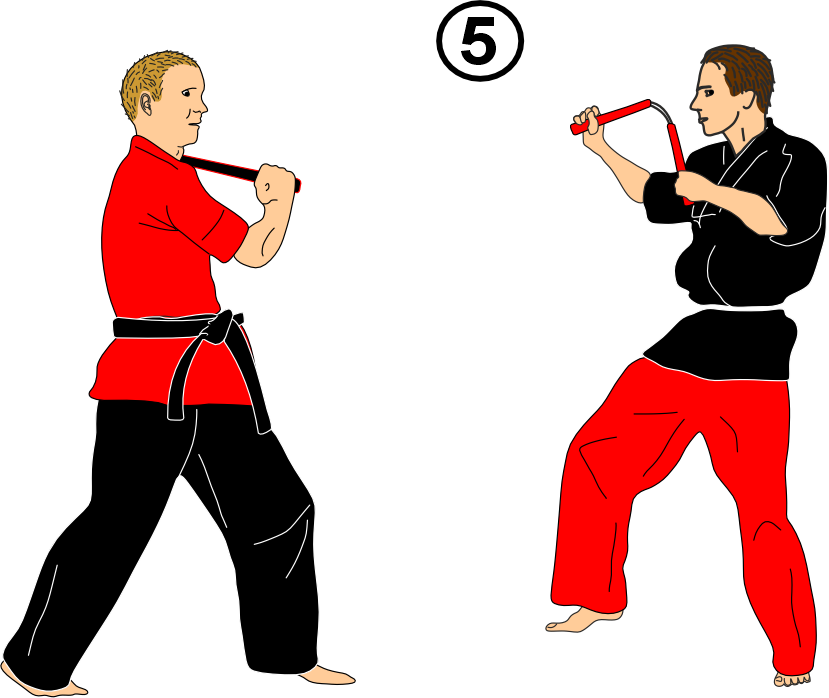
8. Recovery.
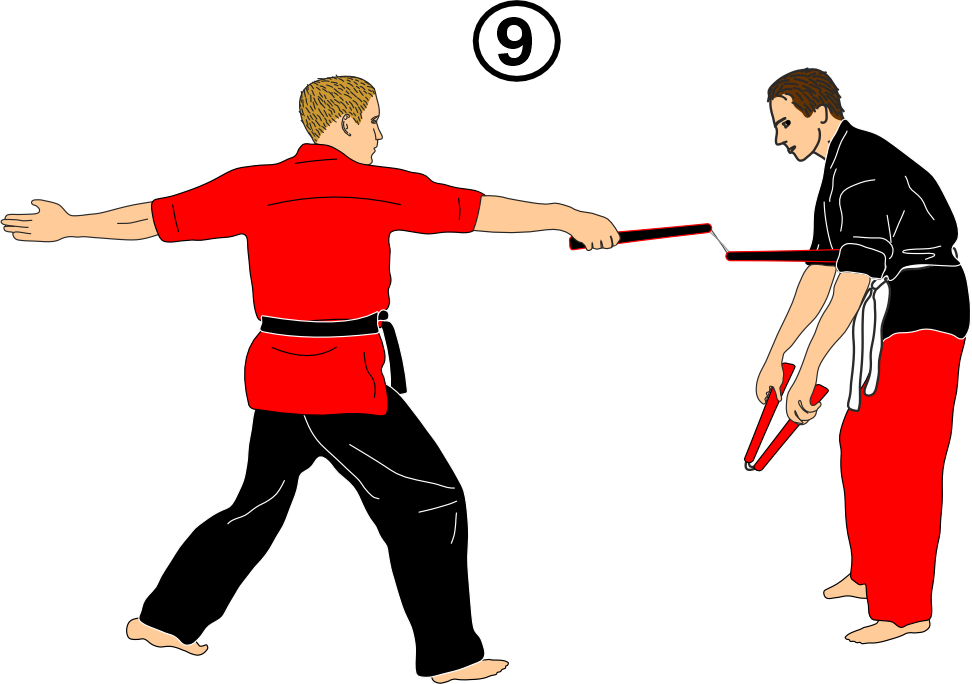
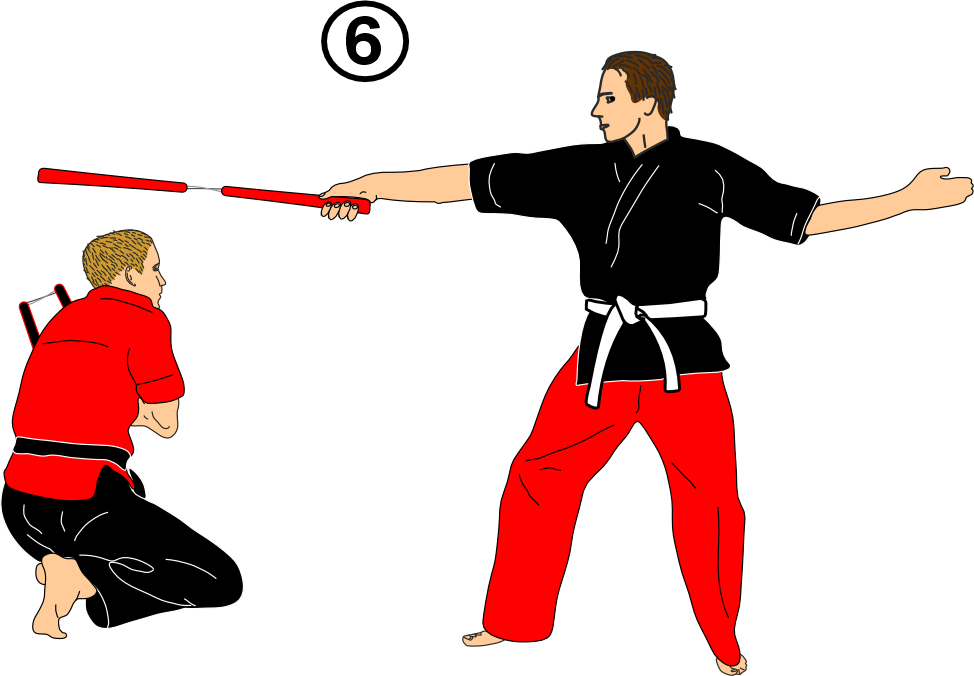
9. You strike the opponent.
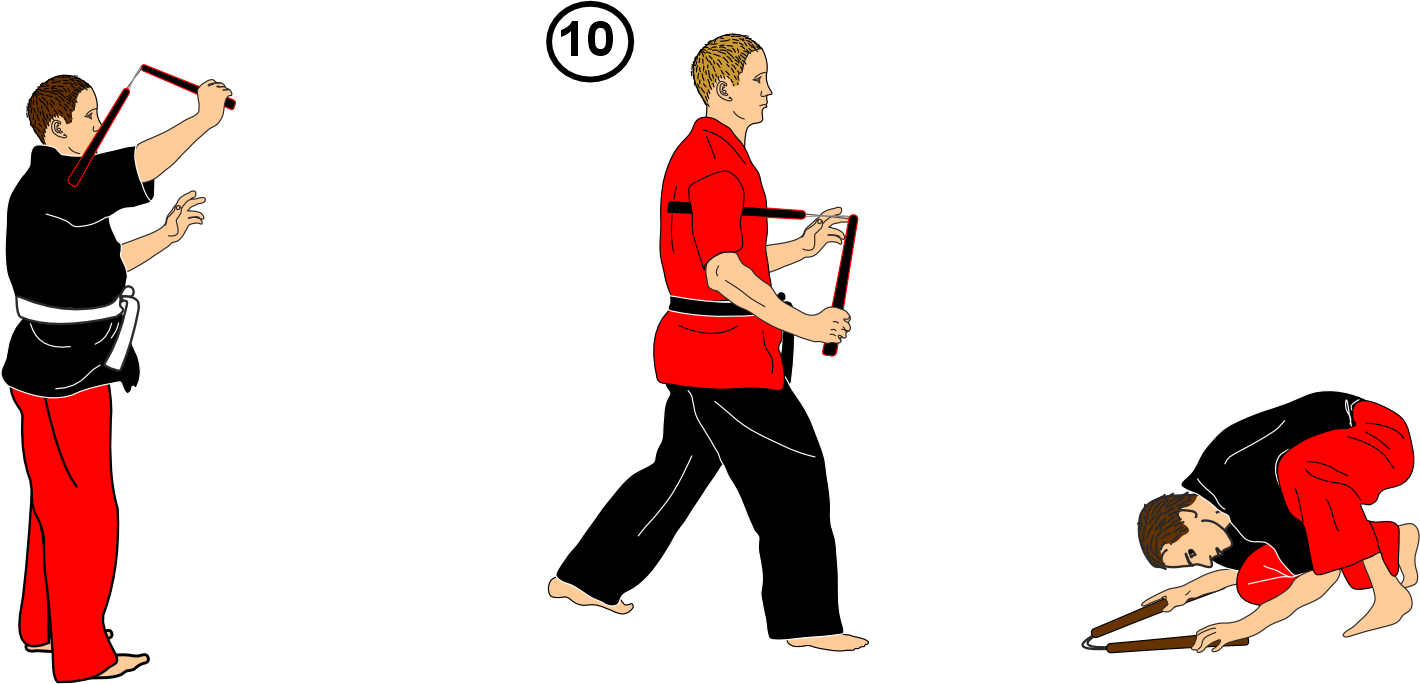
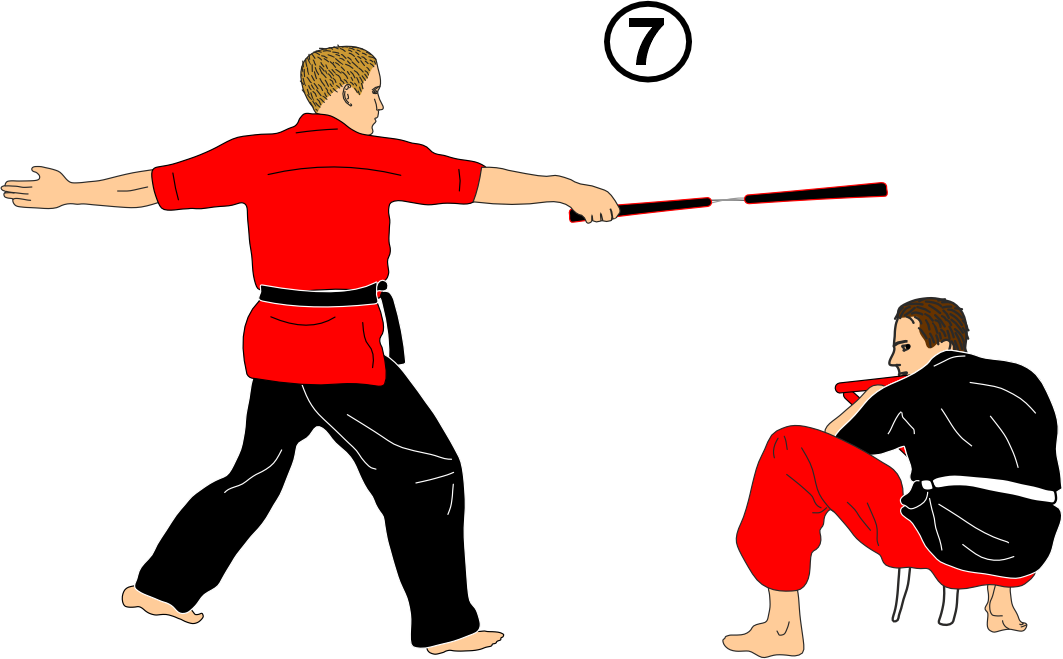
10. Behind you, the second opponent presents himself.
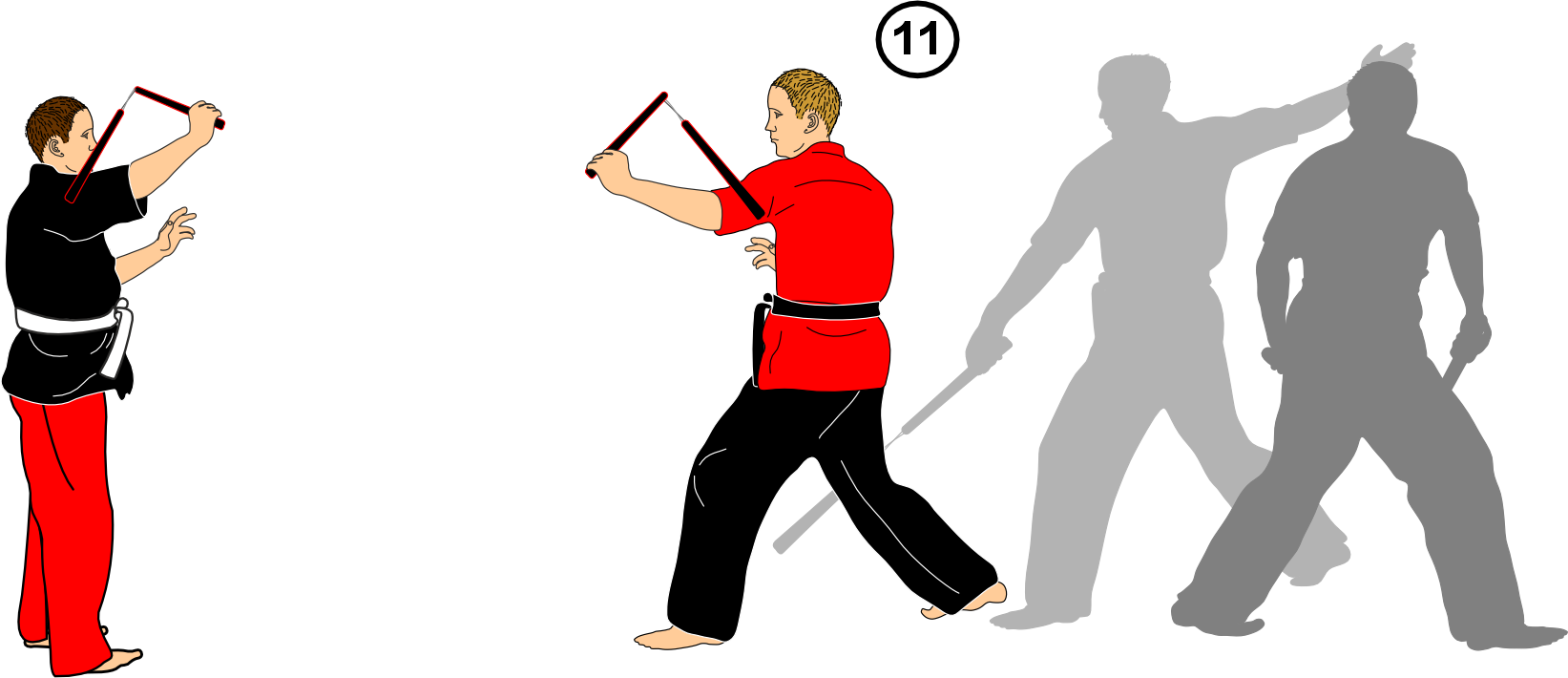
11. You turn around.
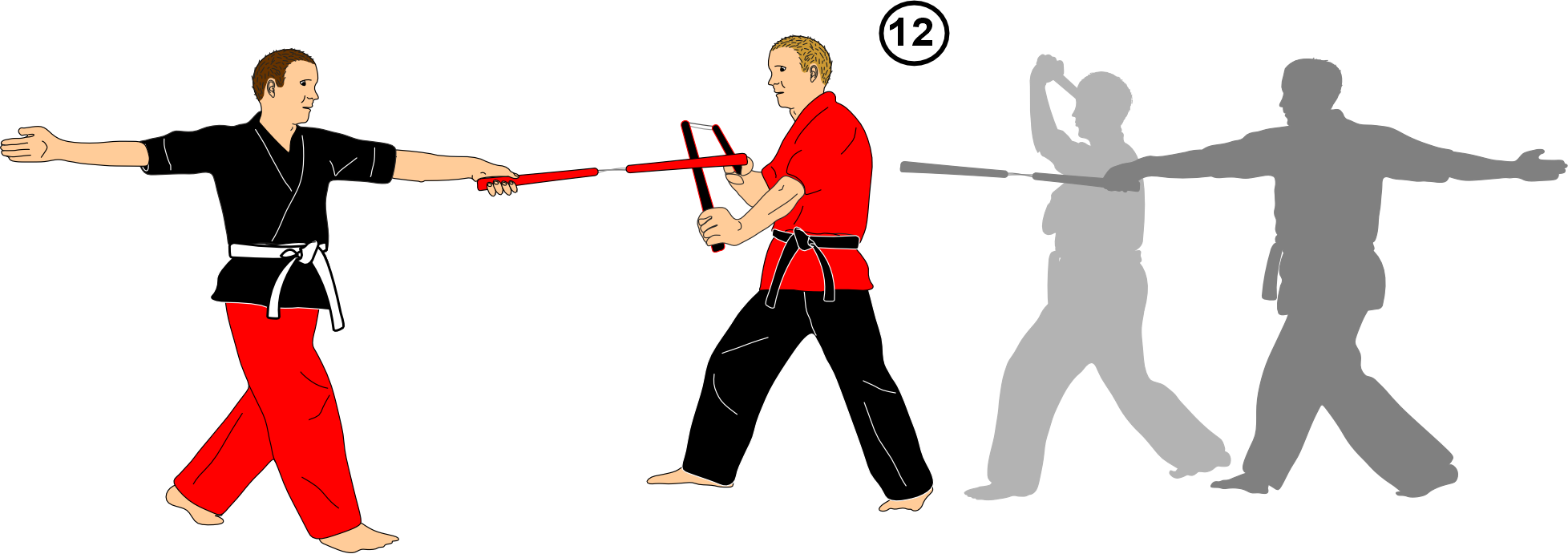
12. He attacks and you block.
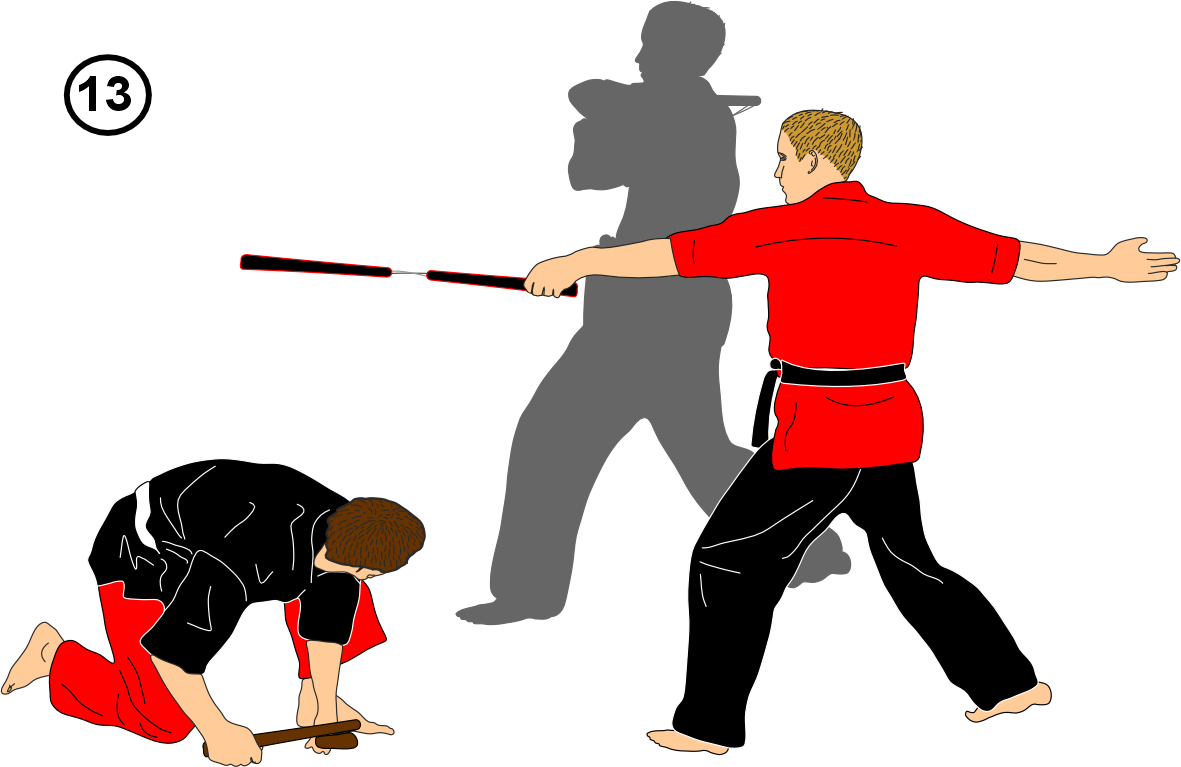
13. You counter; he evades.
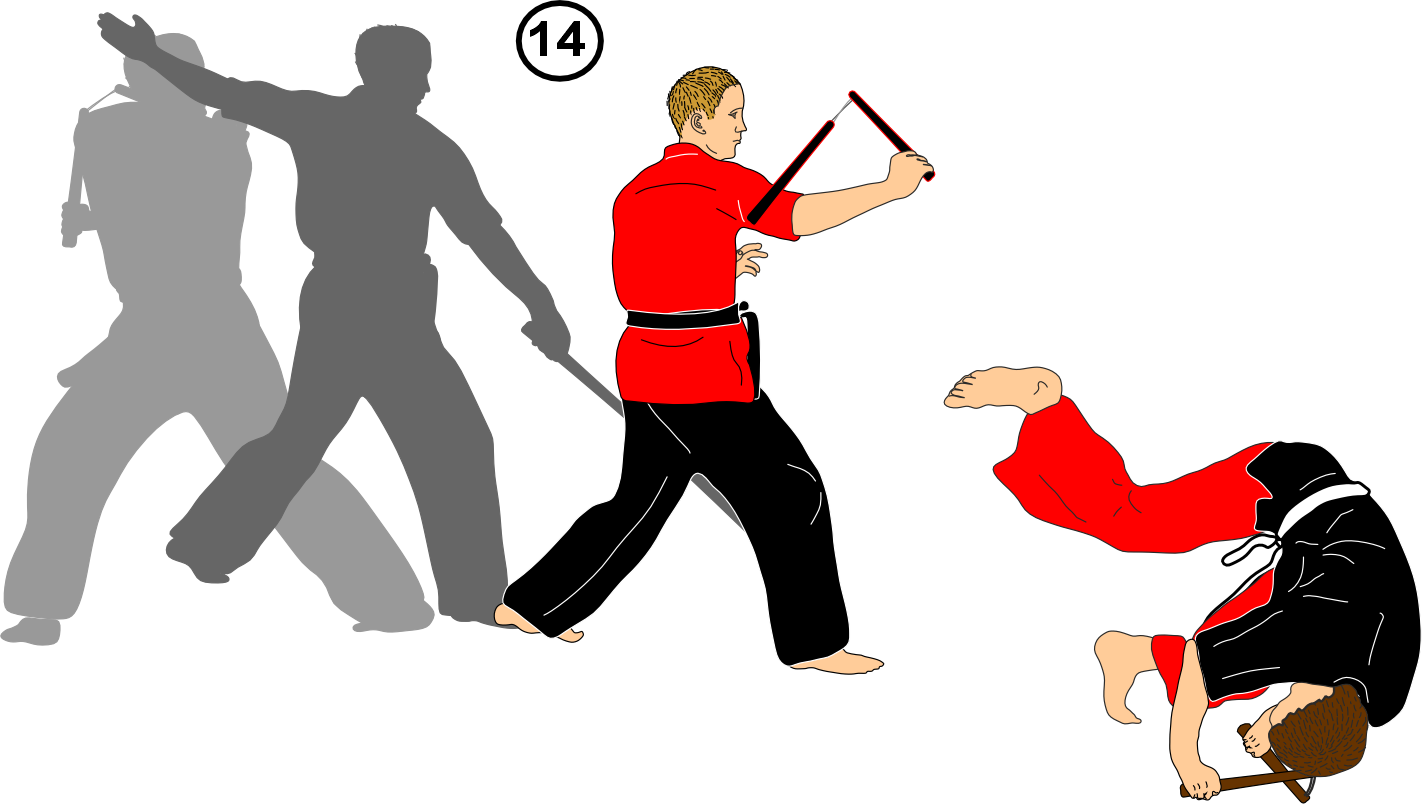
14. He rolls away (forward roll); you follow while turning.
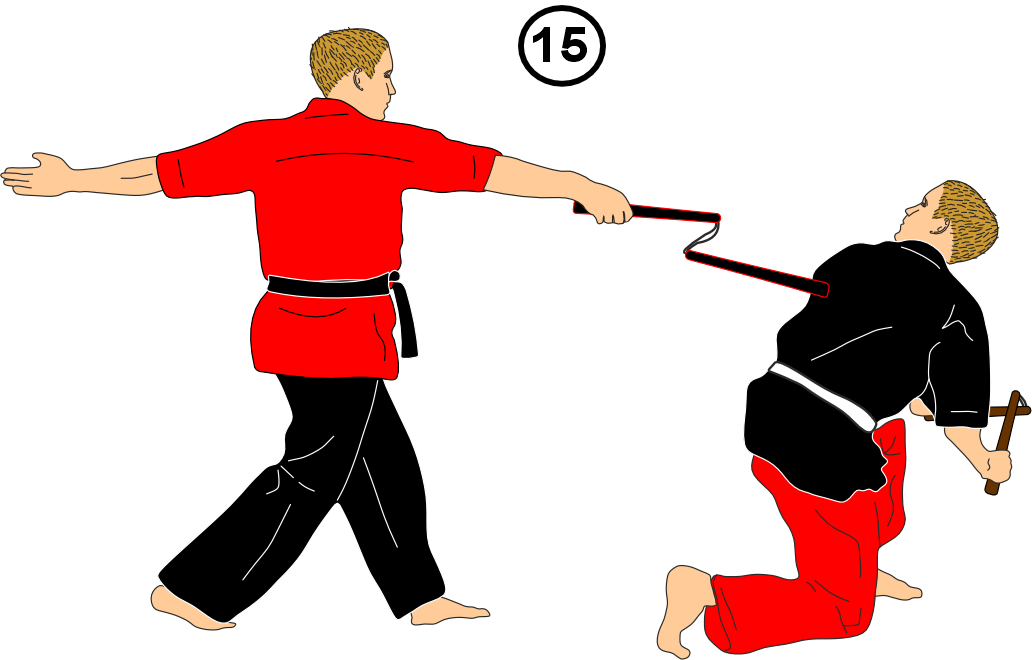
15. As he attempts to recover, you strike him.
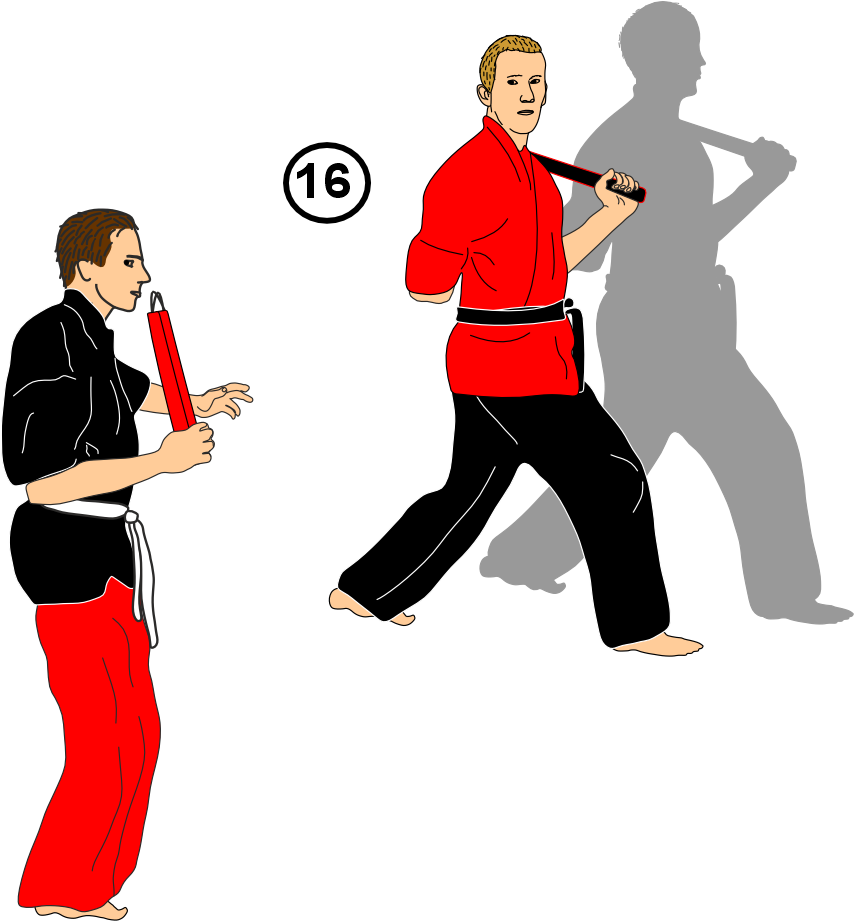
16. You look and see a renewed threat from the first partner (opponent).
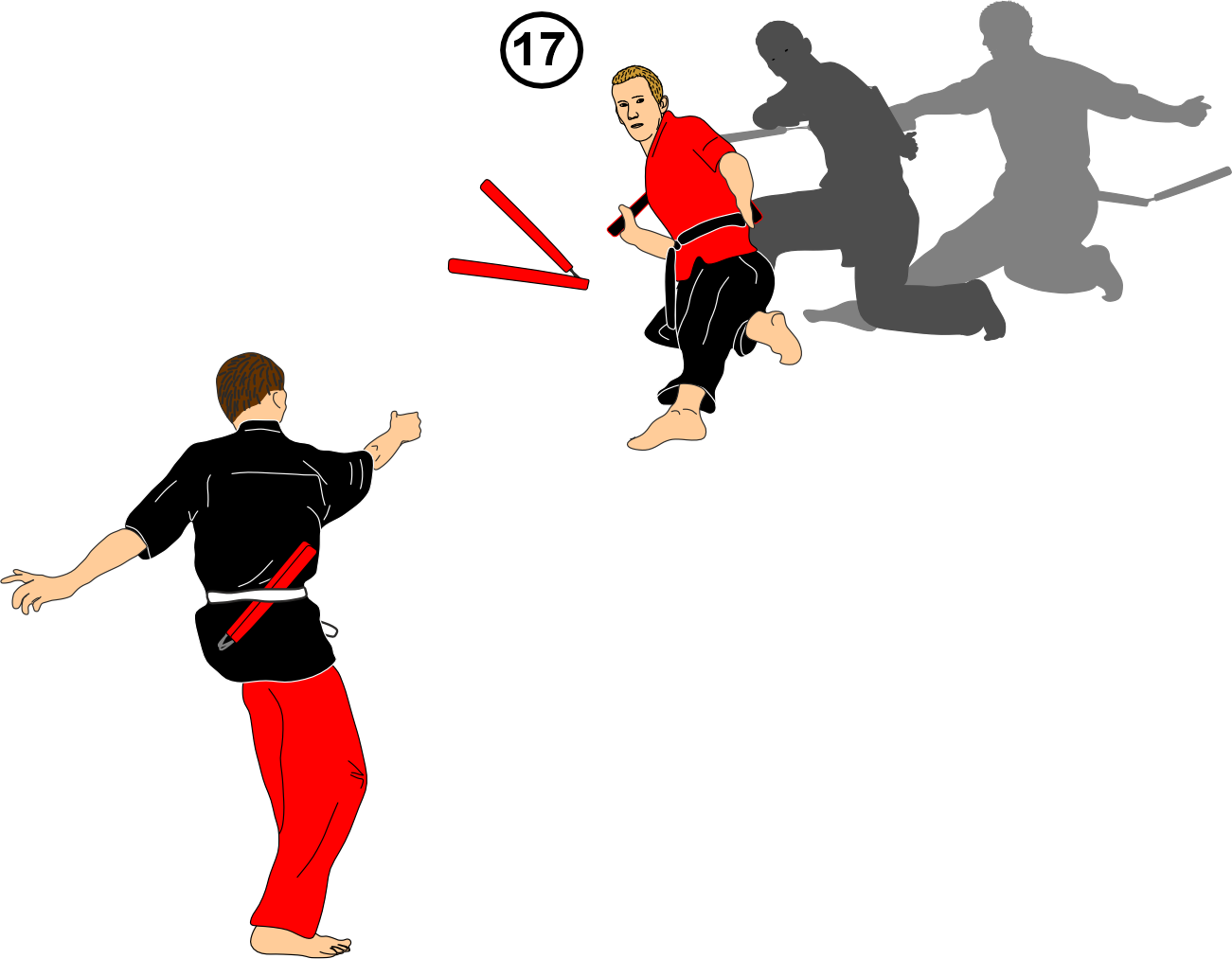
17. He throws a nunchaku at you; you evade or dive away while turning.
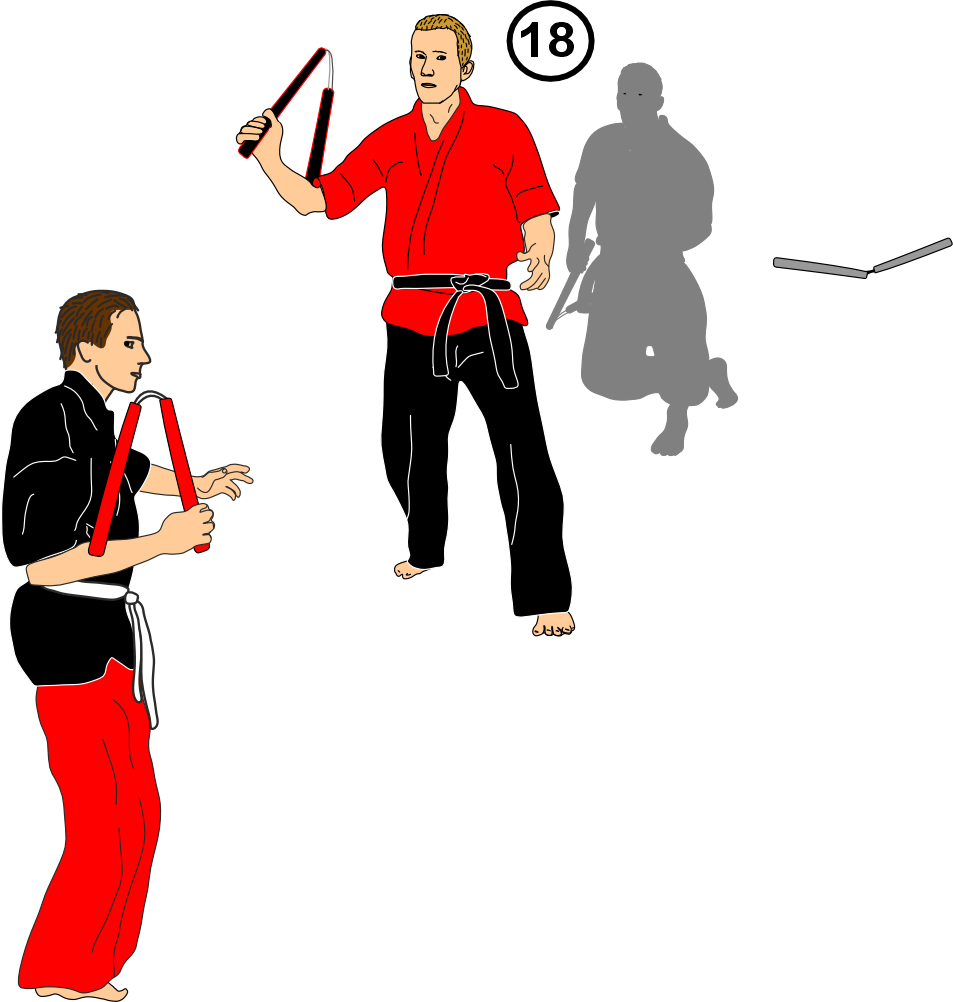
18. You rise again and the opponent takes a second nunchaku.
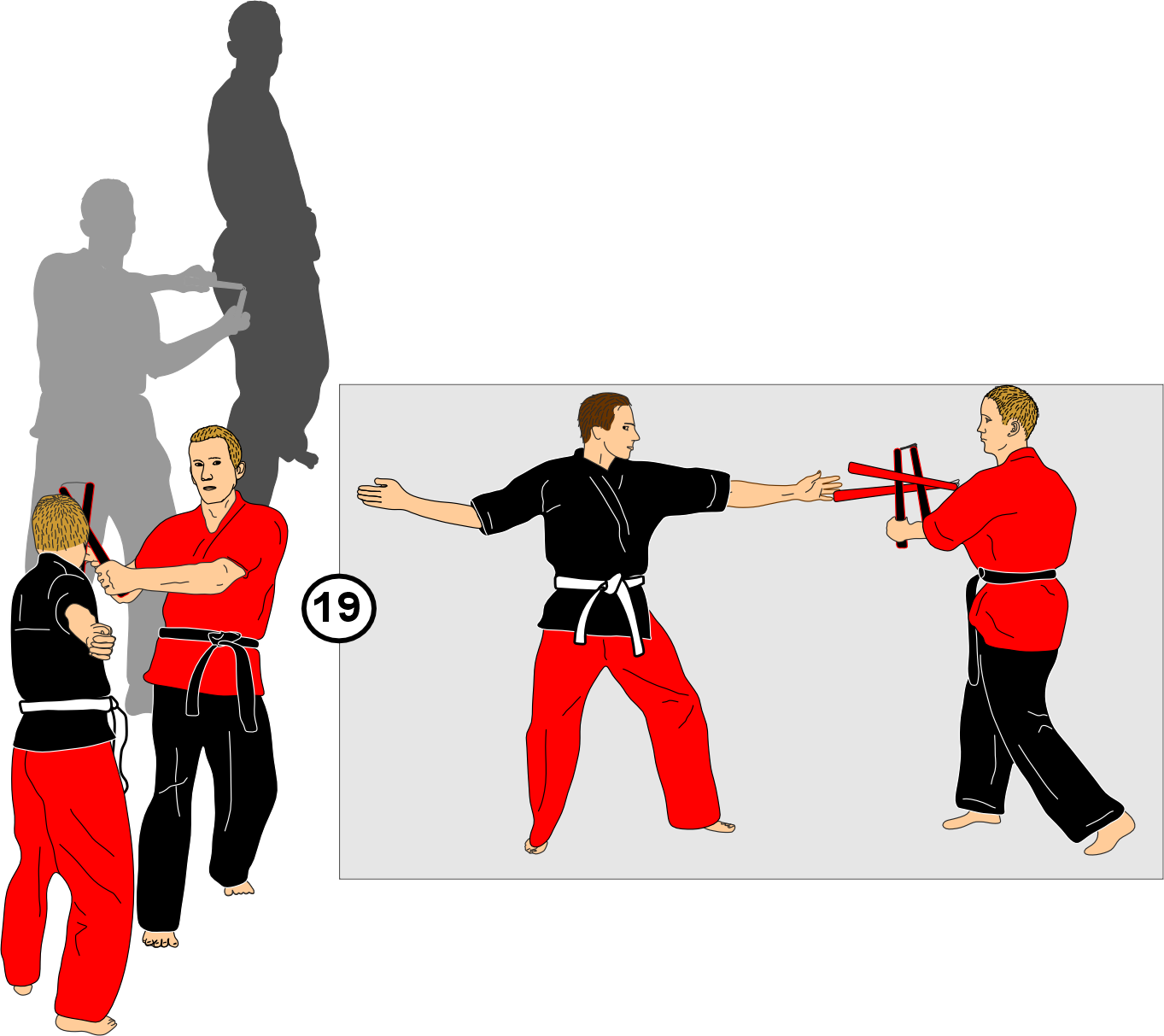
19. You advance, but the opponent moves backward and strikes; you knock the nunchaku out of his hand (arraché).
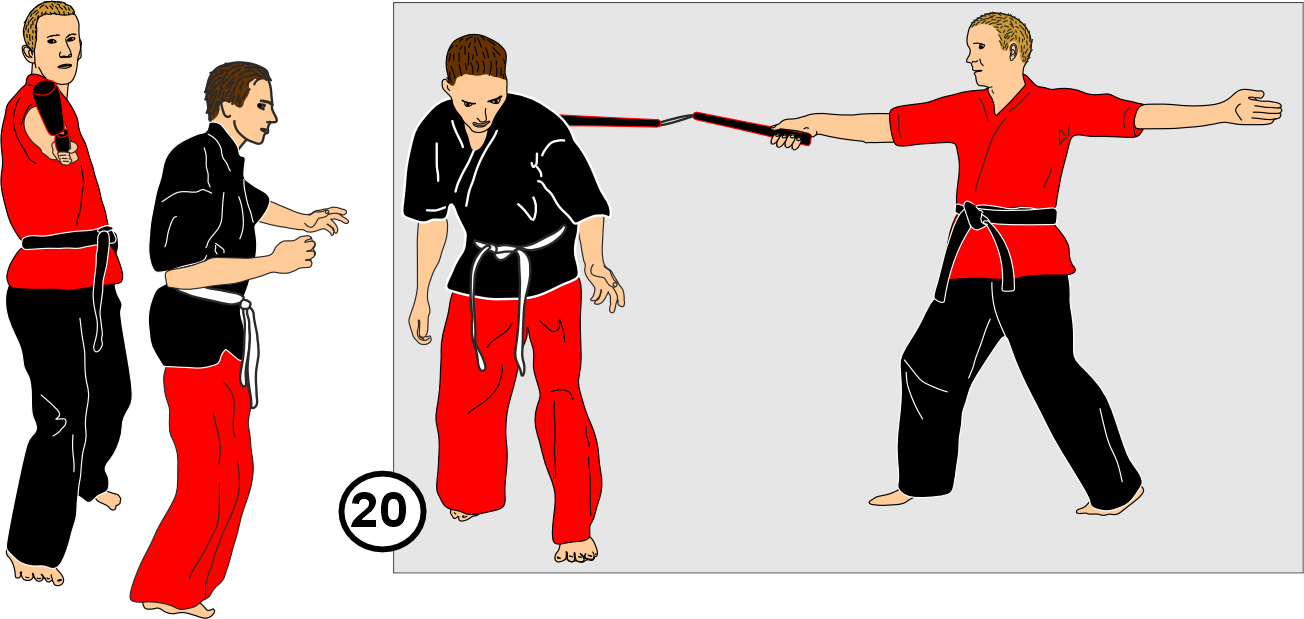
20. He dives away (without a nunchaku) and you strike him as he retreats.
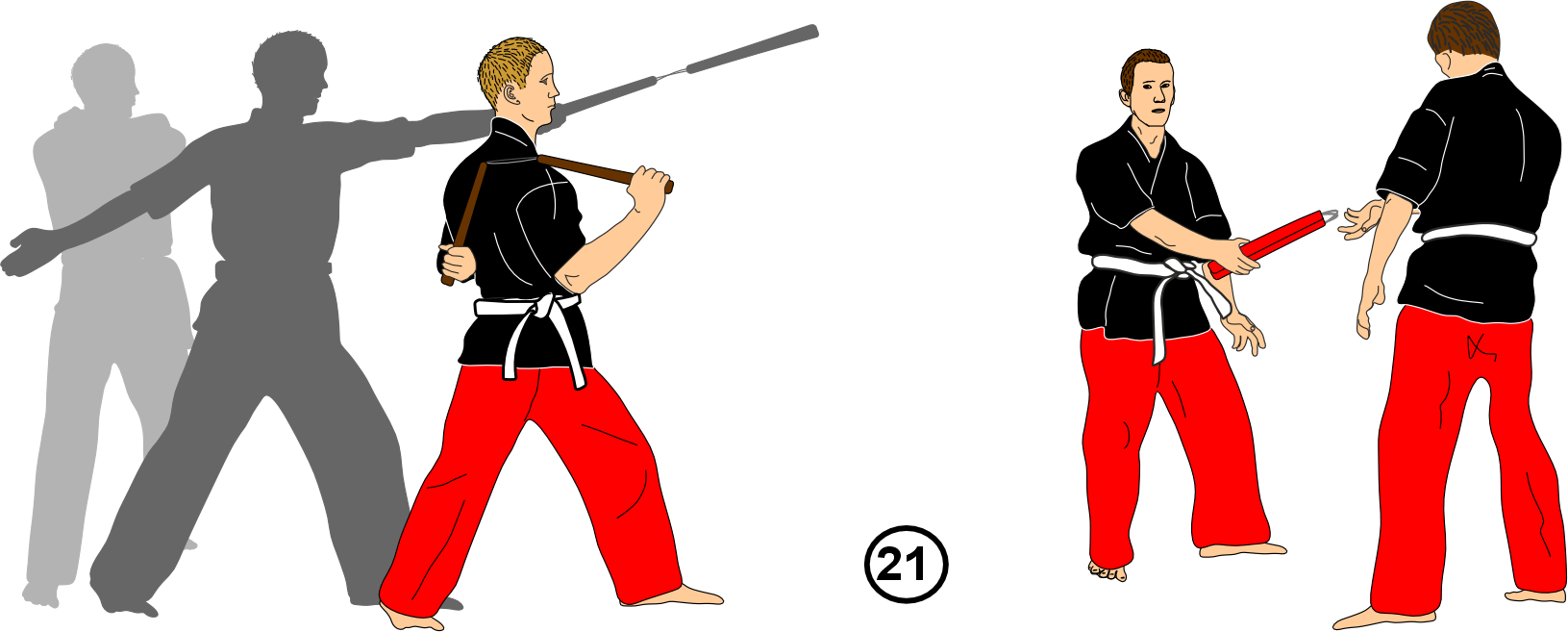
21. He receives a new nunchaku from his partner.
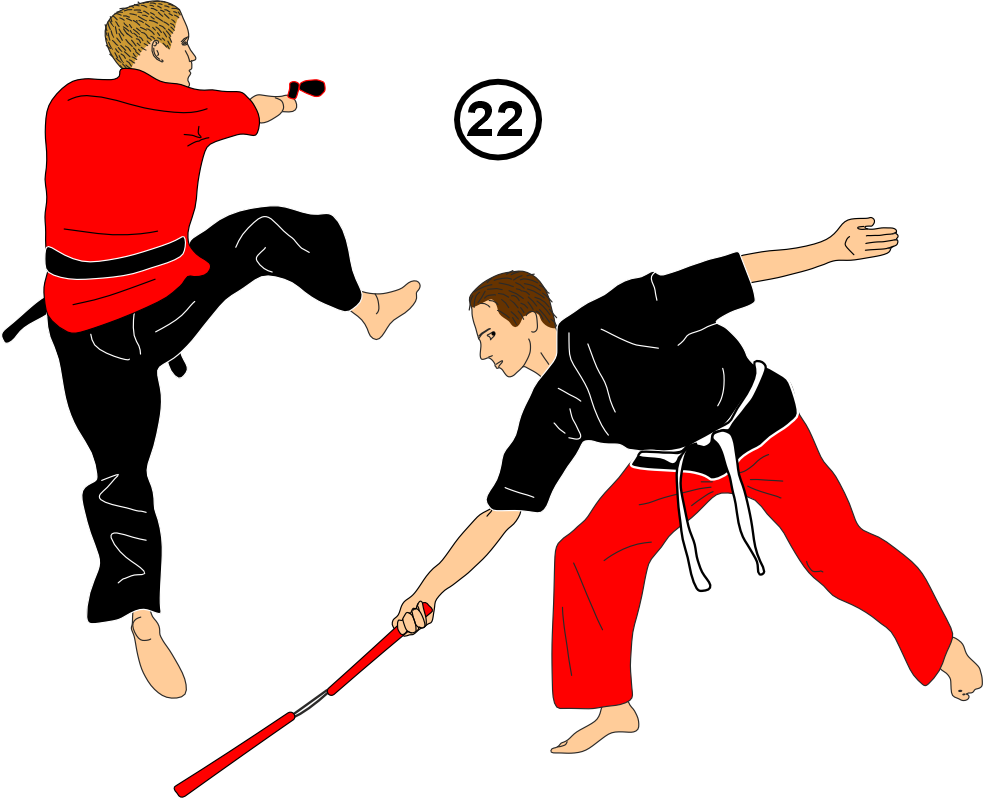
22. He immediately attacks you low; you evade with a jump.
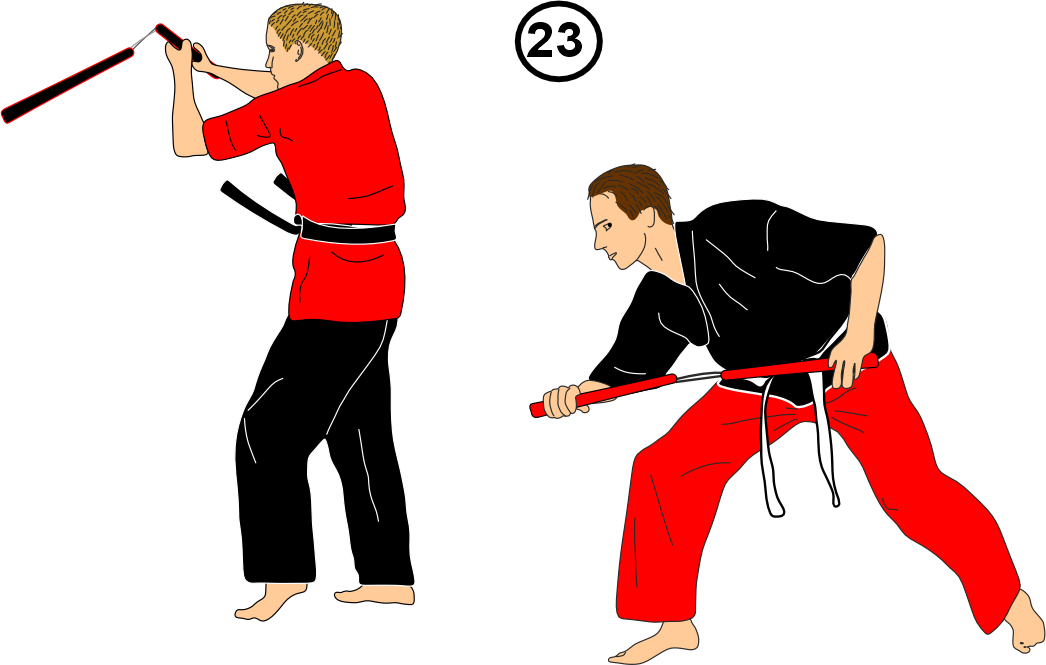
23. You turn and deliver a backward strike.
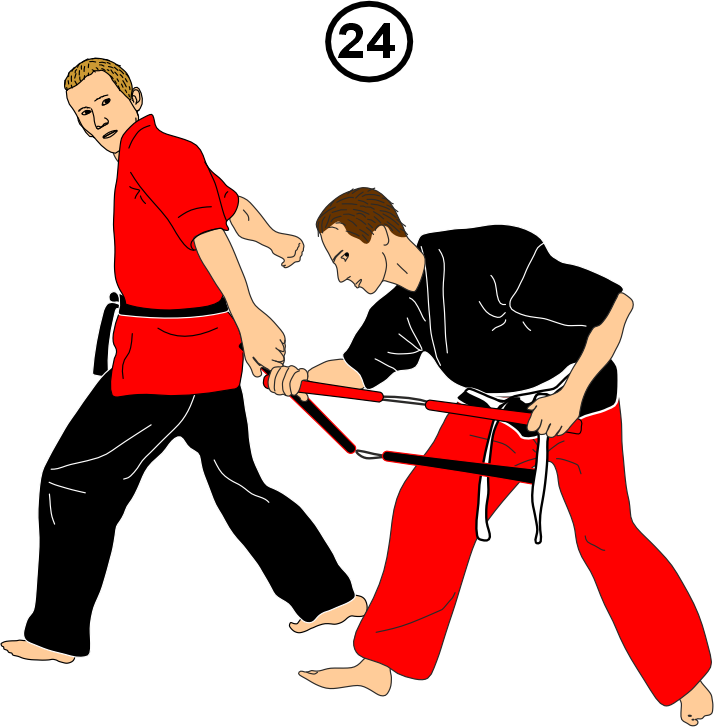
24. You strike him in the groin.
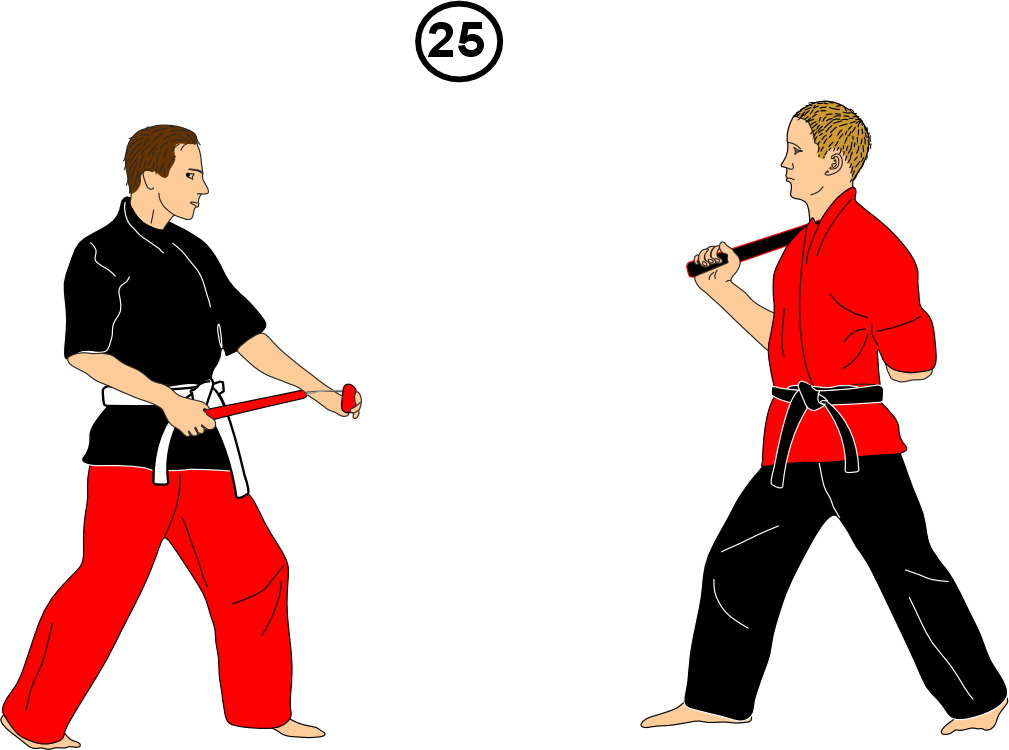
25. The other opponent is once again facing you.
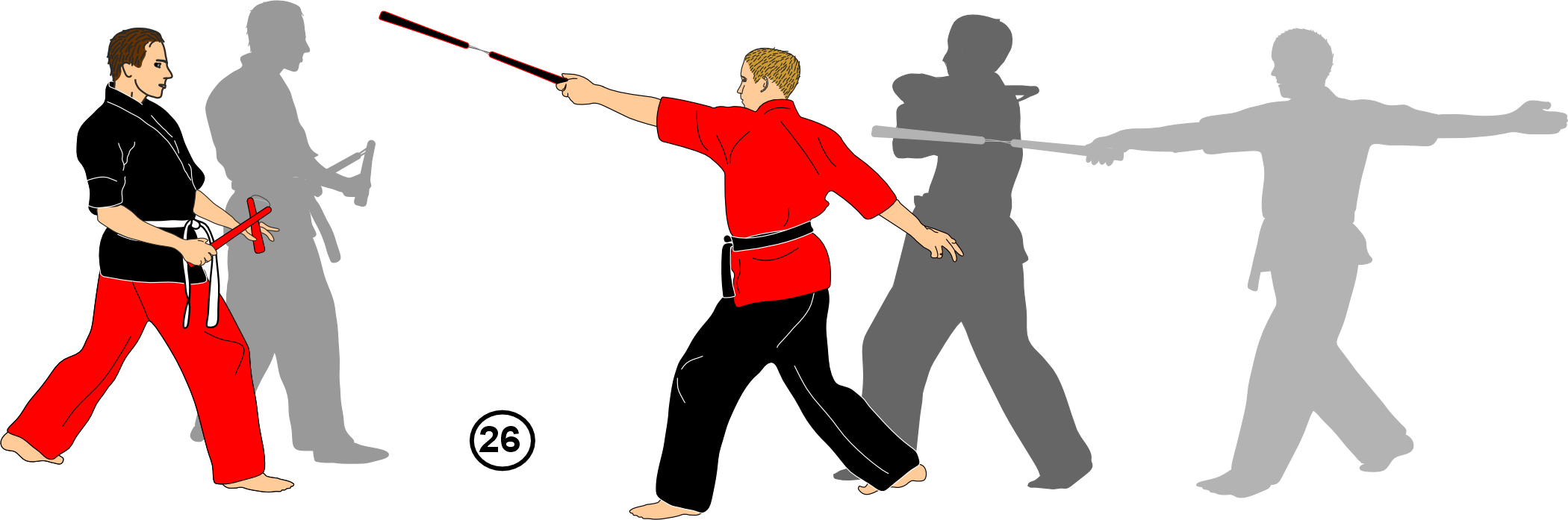
26. You attack him; he retreats.
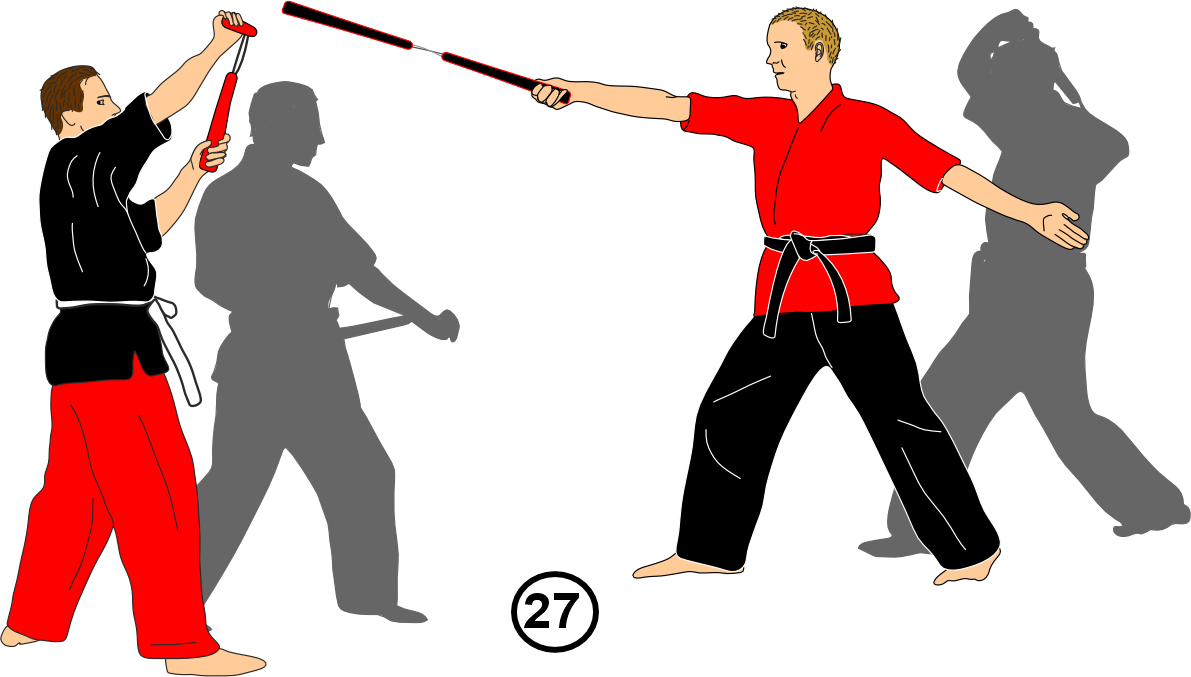
27. You attack again; he blocks.
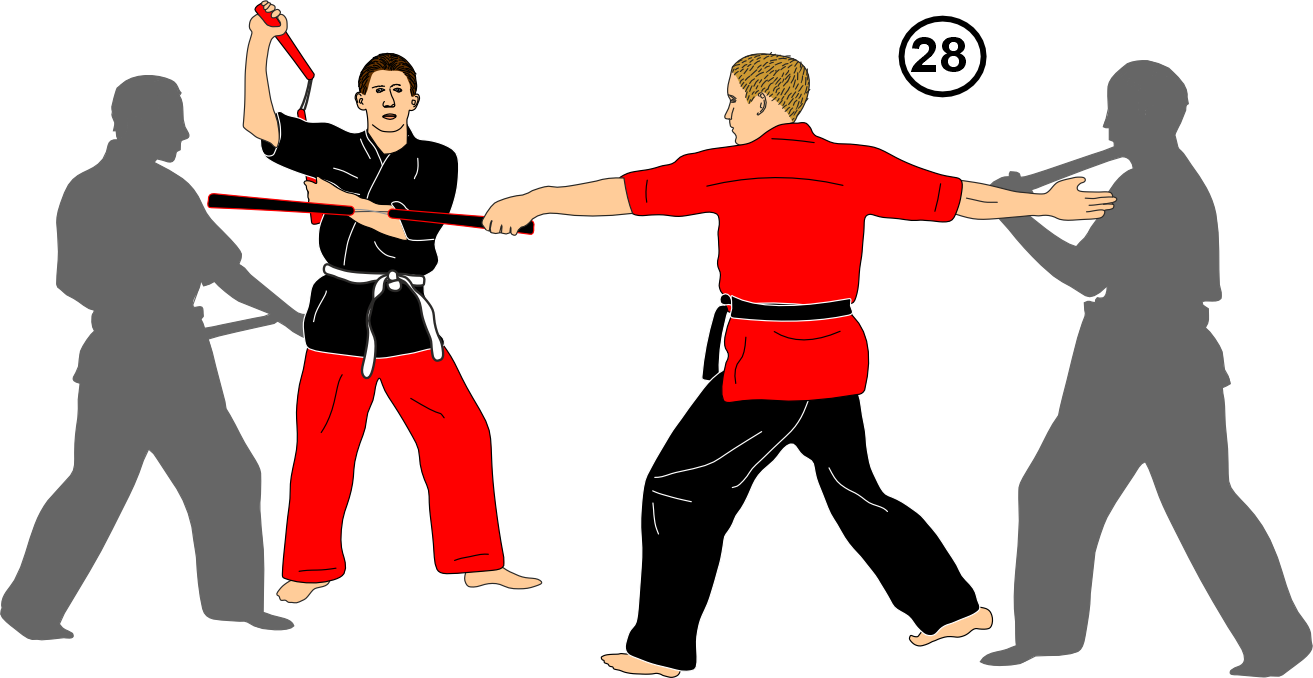
28. You attack again; he evades sideways.
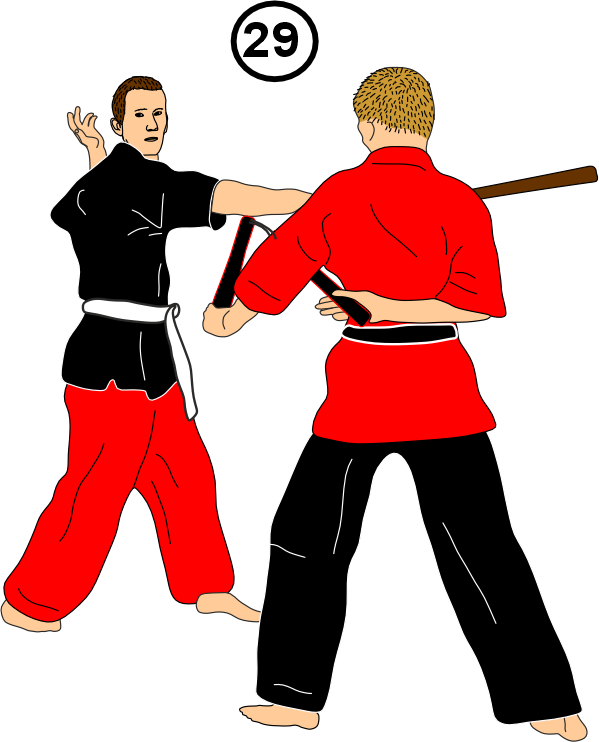
29. He attacks you; you evade sideways.
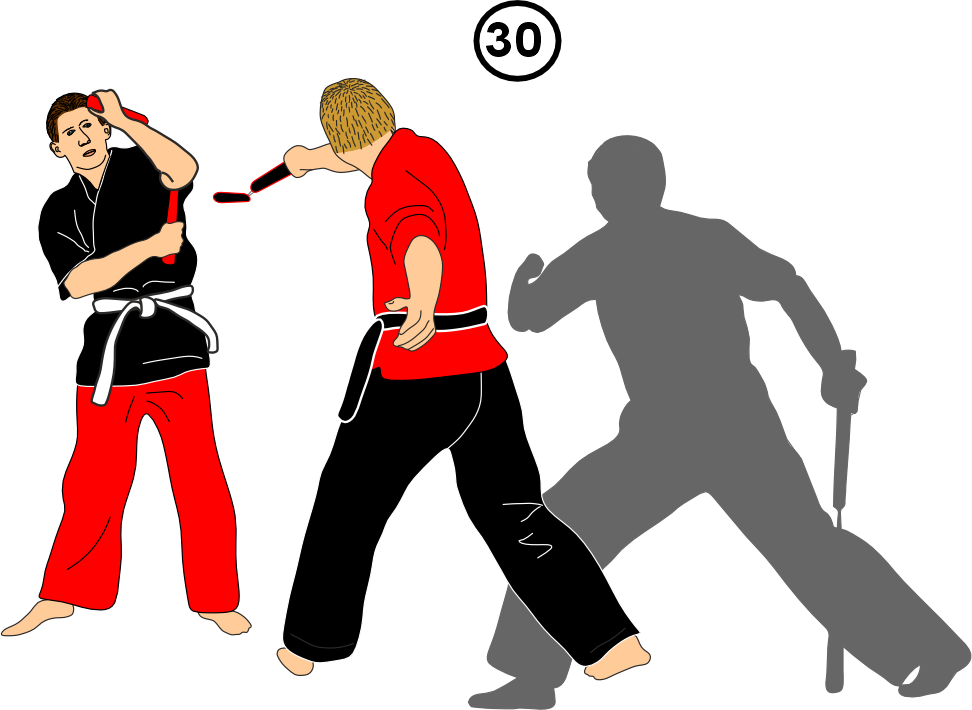
30. You turn and strike him.
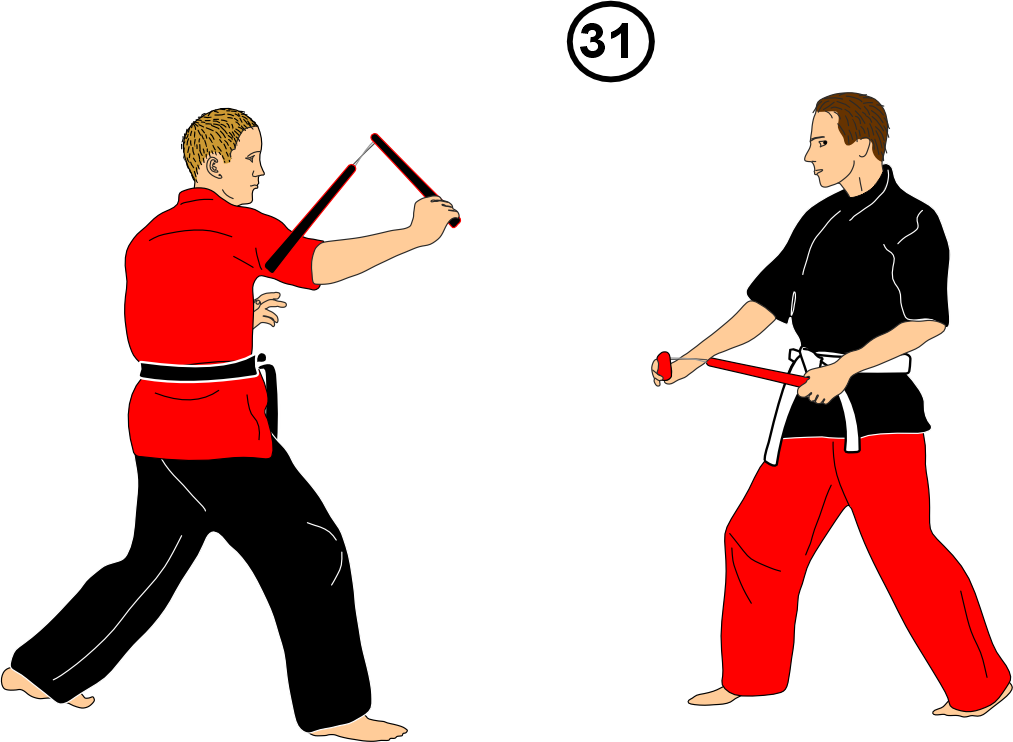
31. You face each other.
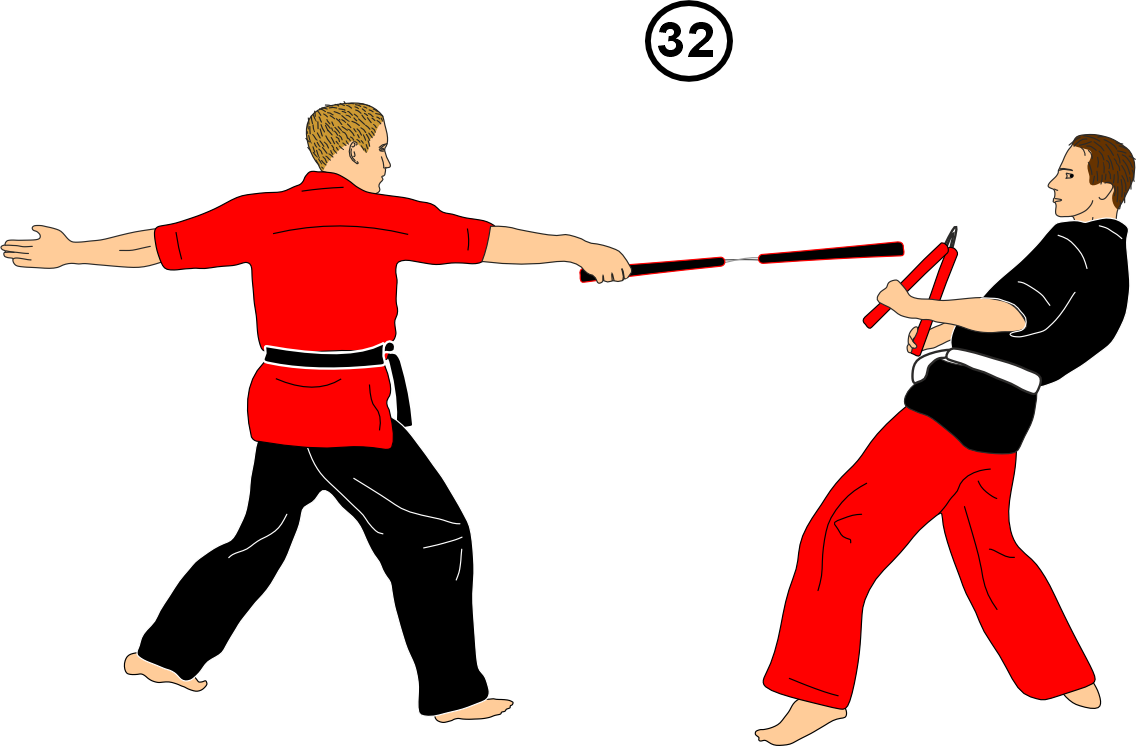
32. You attack; he retreats.
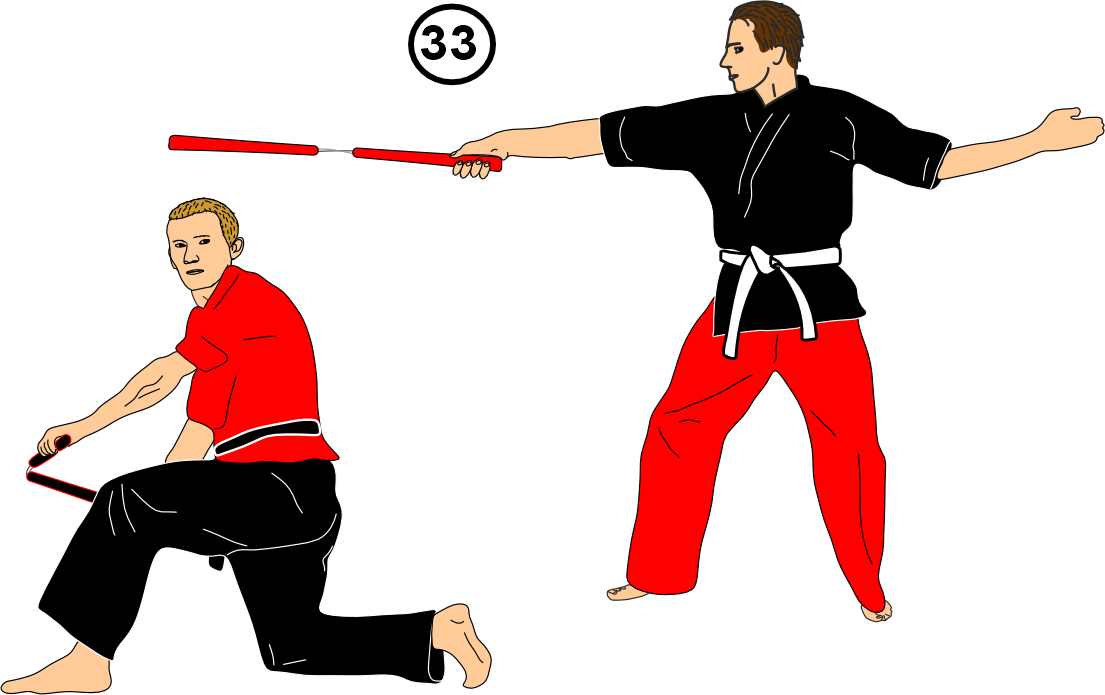
33. He counters; you dive away and turn.
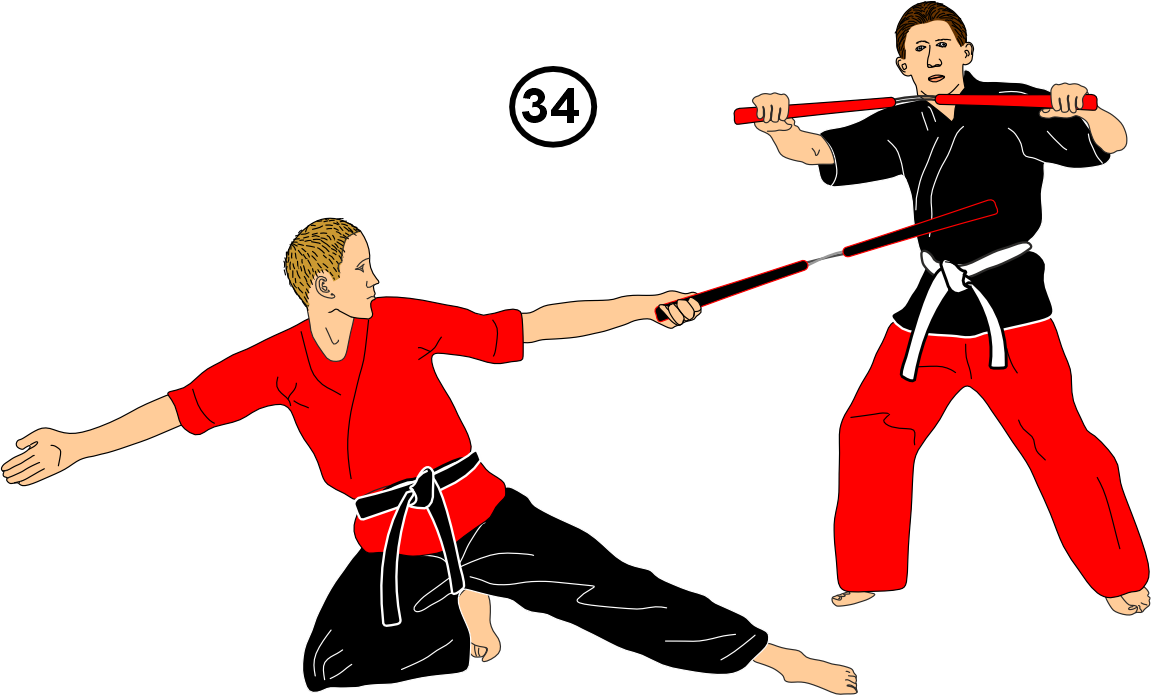
34. You strike him.
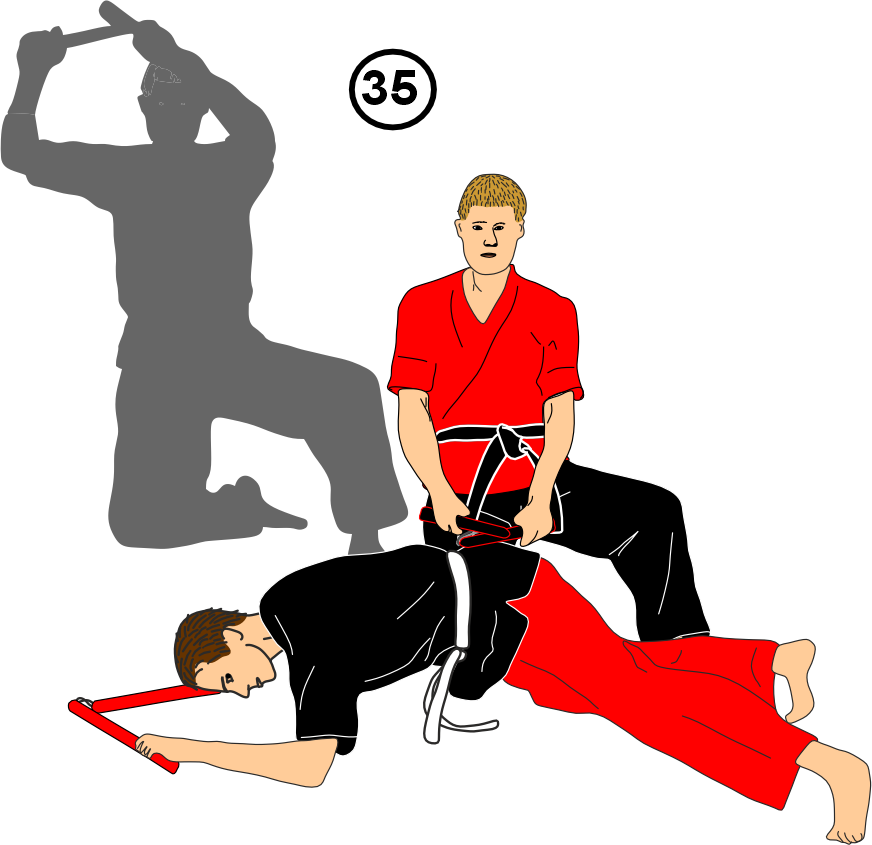
35. He falls forward; you deliver one final strike with kiai.
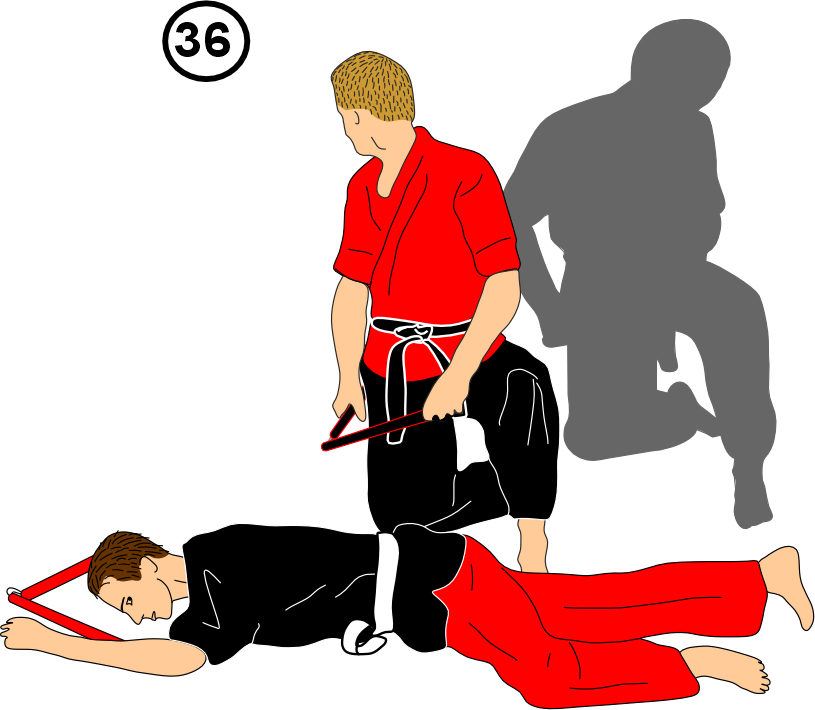
36. Behind you there is danger again; you look left, then right.
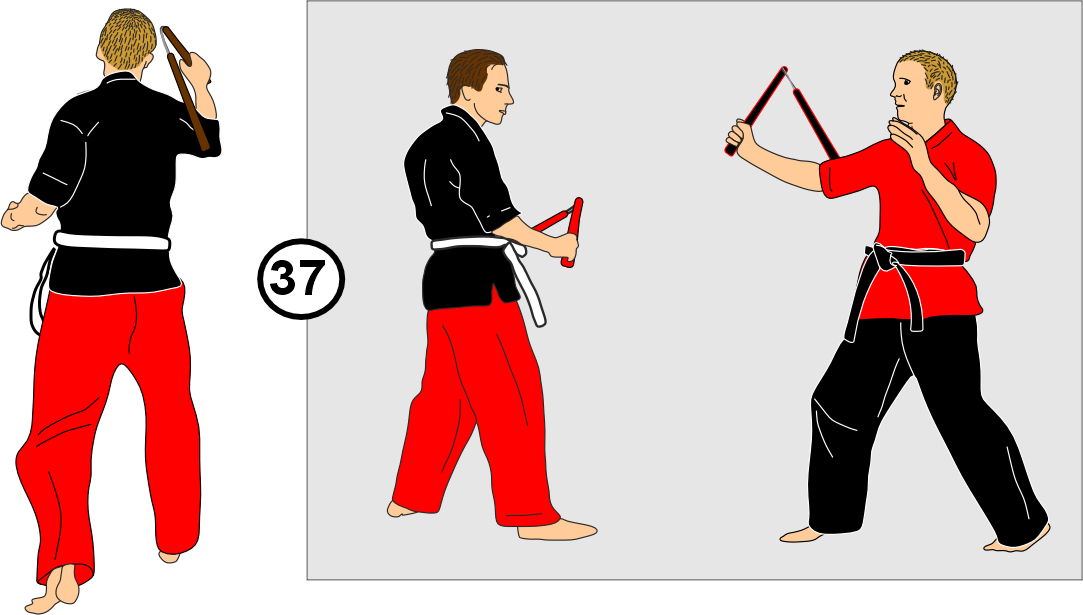
37. You rise and face your opponent.
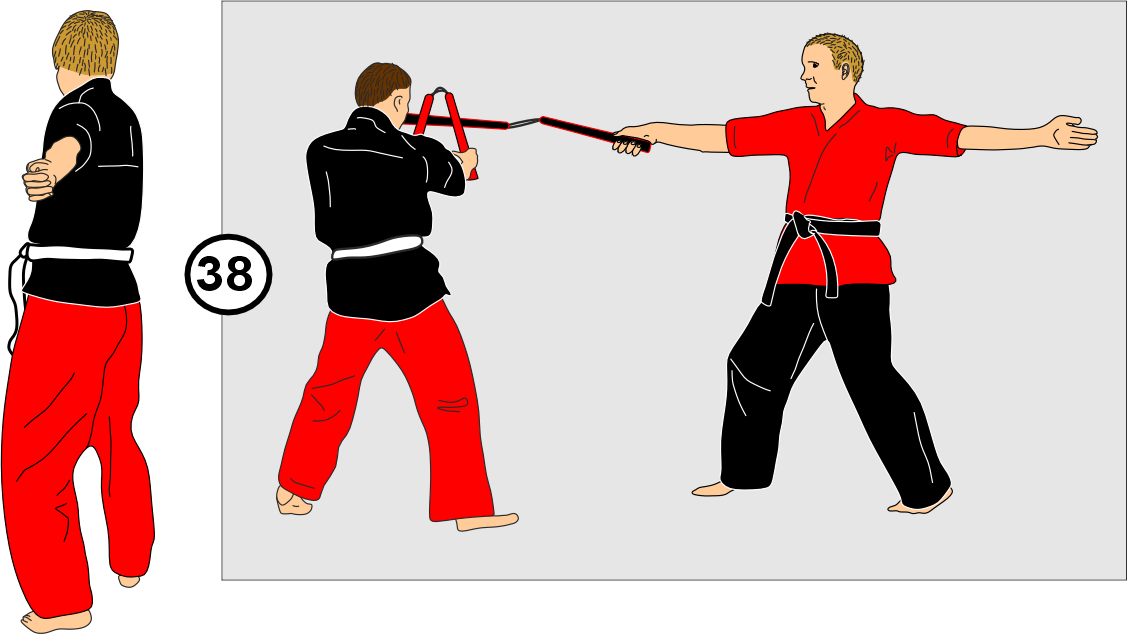
38. You attack; he blocks.
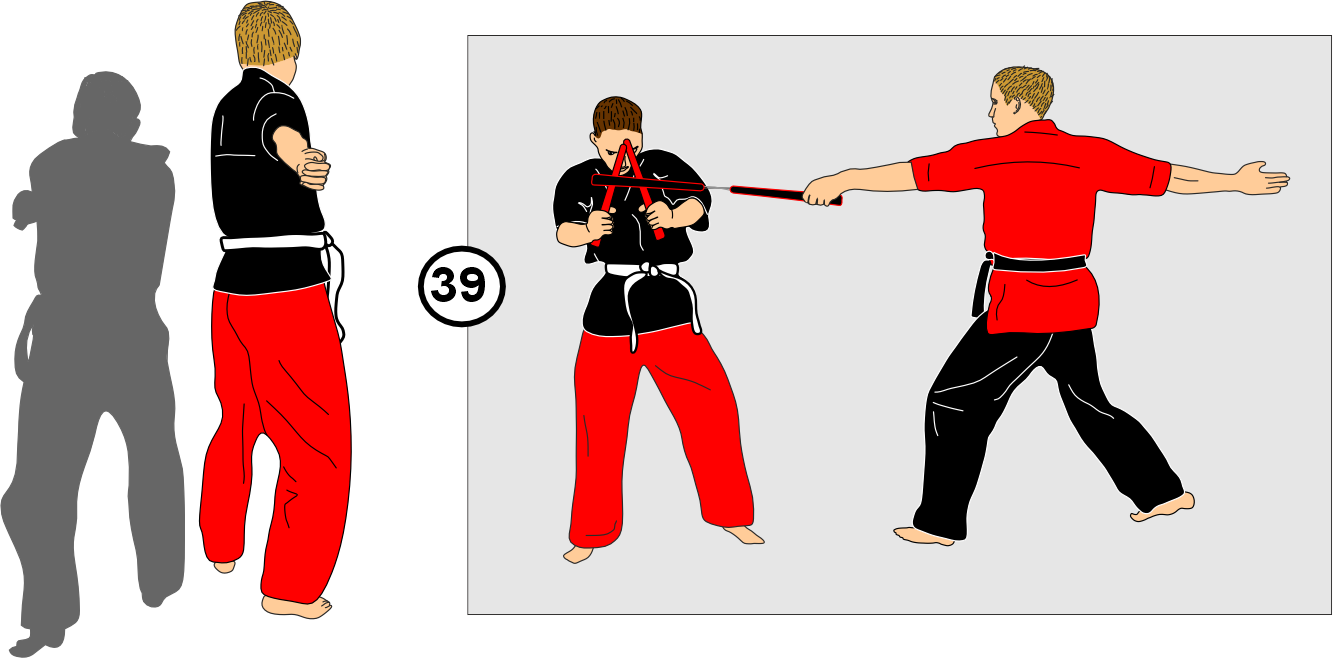
39. You attack again; he blocks again.
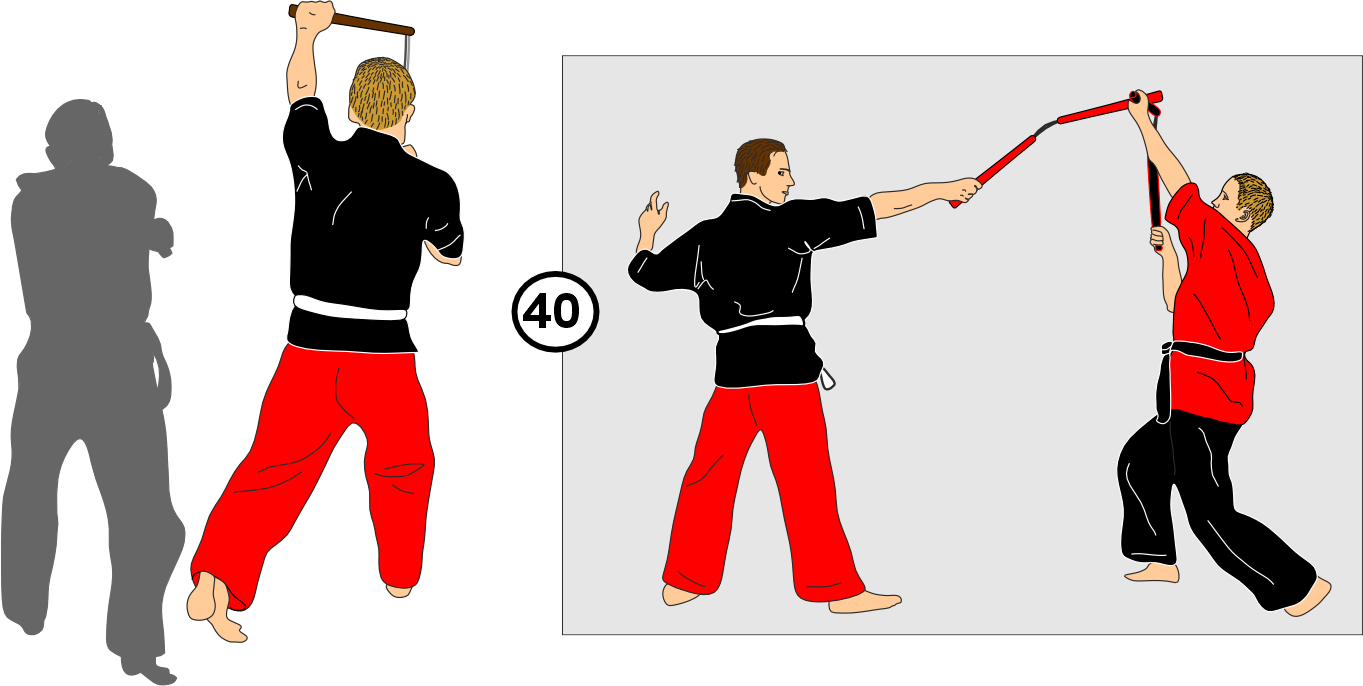
40. He attacks; you block.
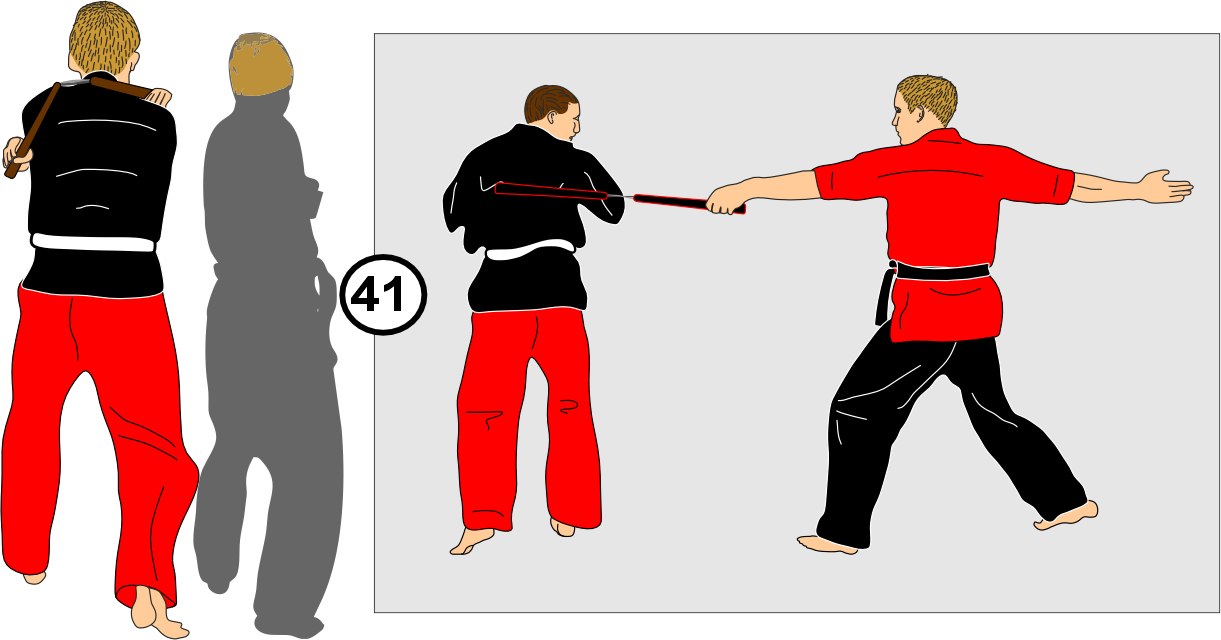
41. You counter and strike him.
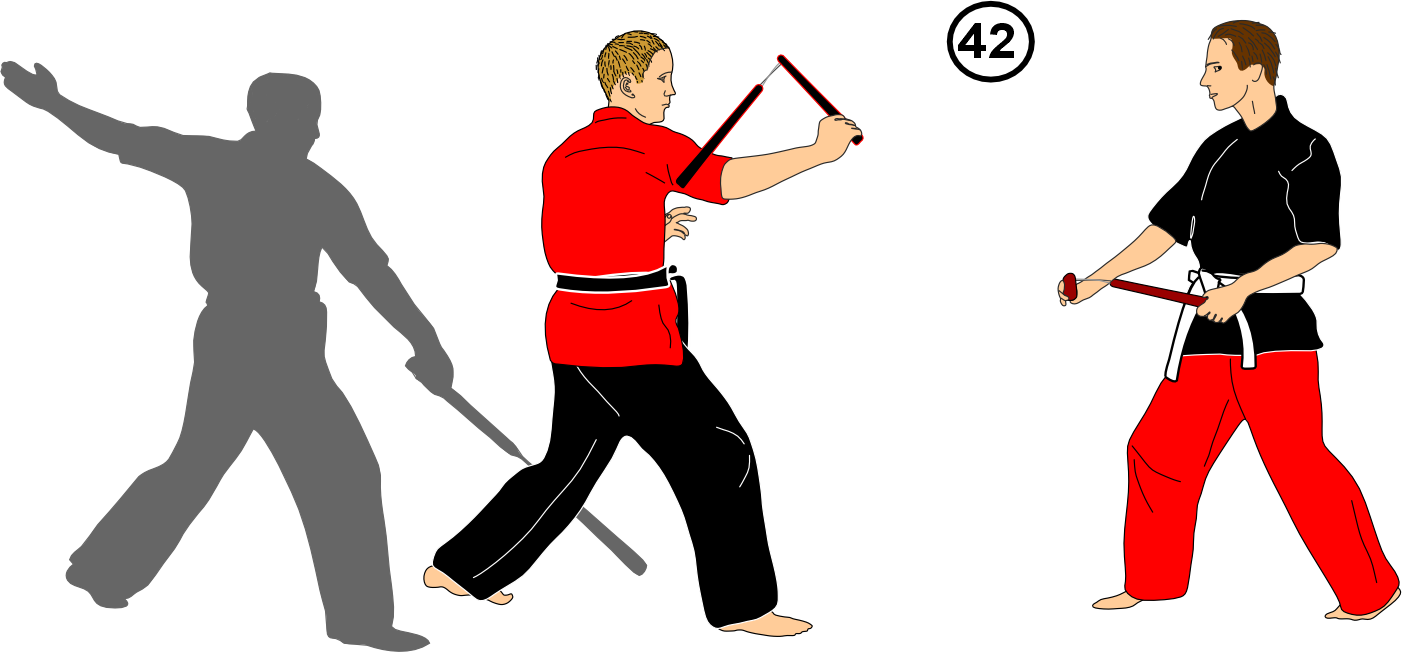
42. He recovers and you face each other.
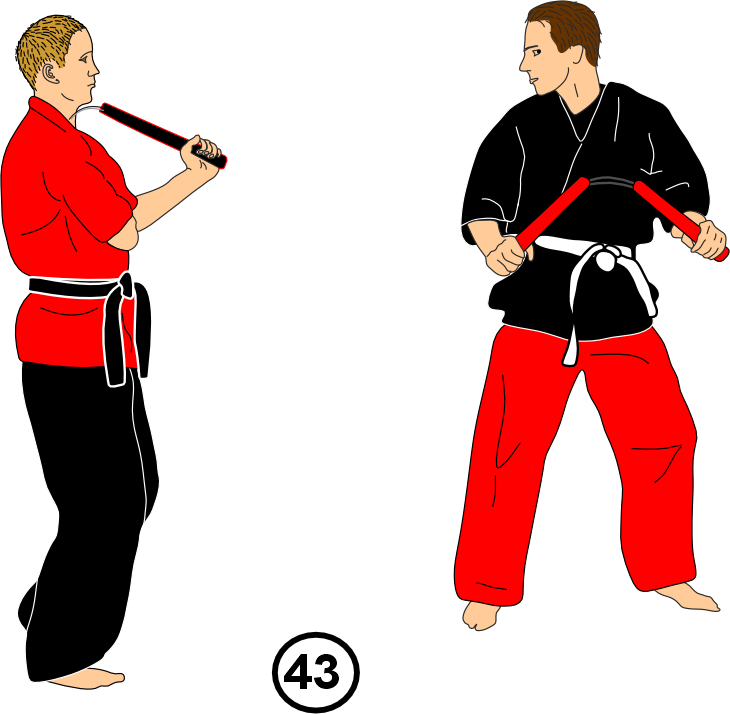
43. He performs a turning jump strike; you dive away.
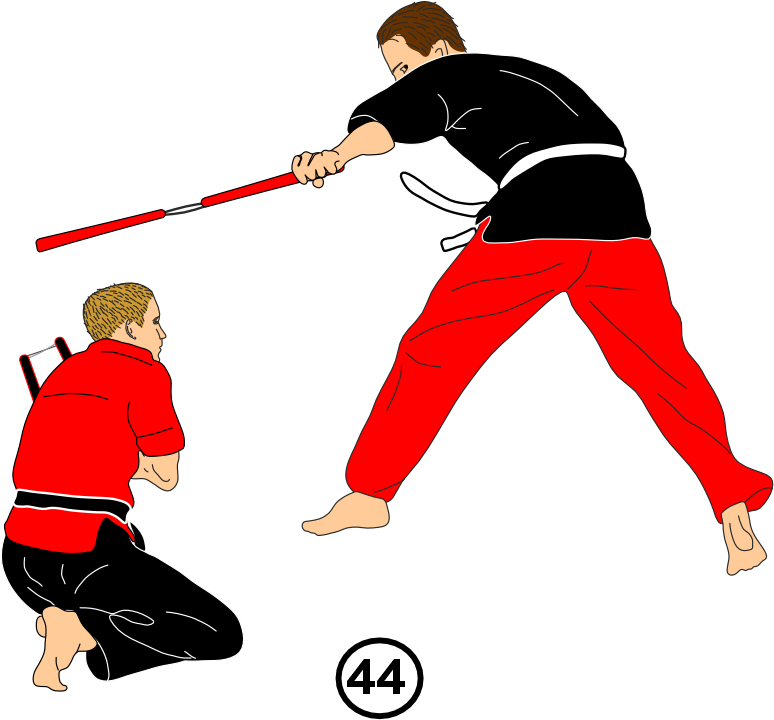
44. He performs another jumping strike; you dive away.
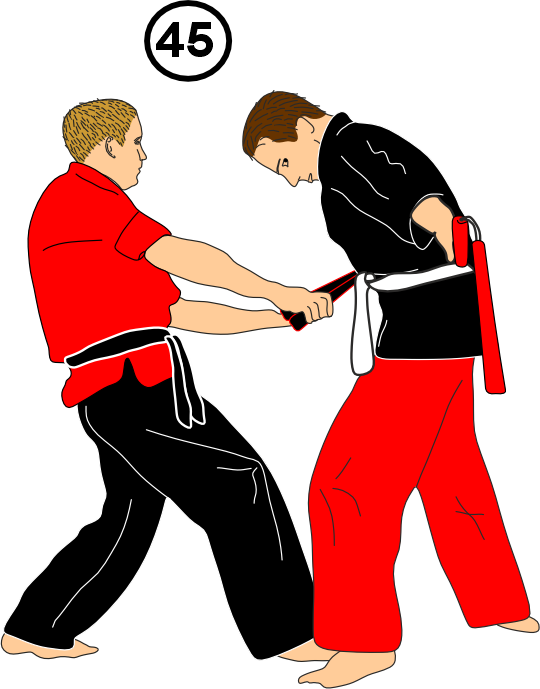
45. You counter with a short strike; he collapses.
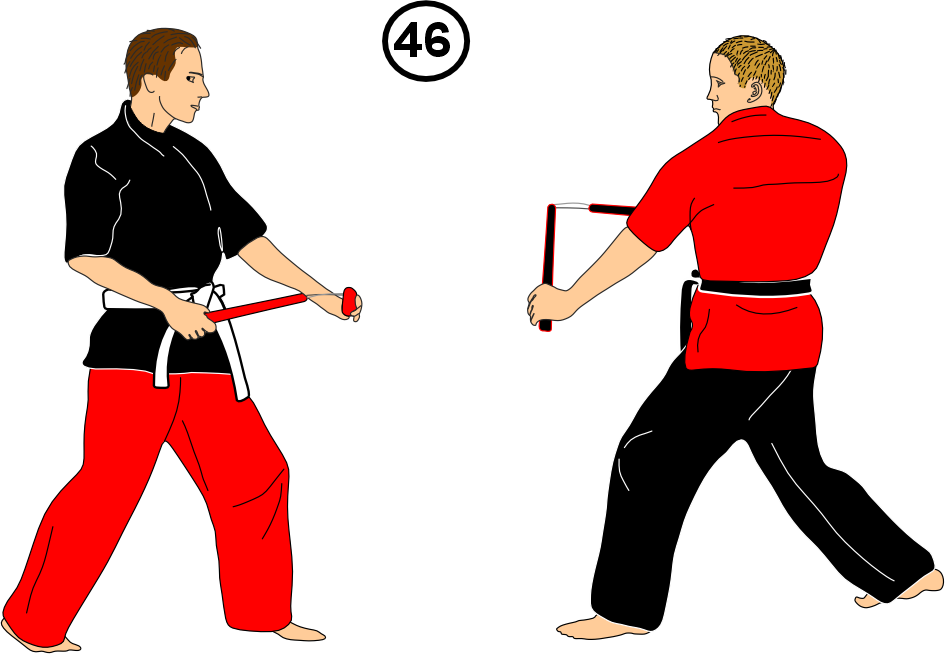
46. You now face the other opponent again.
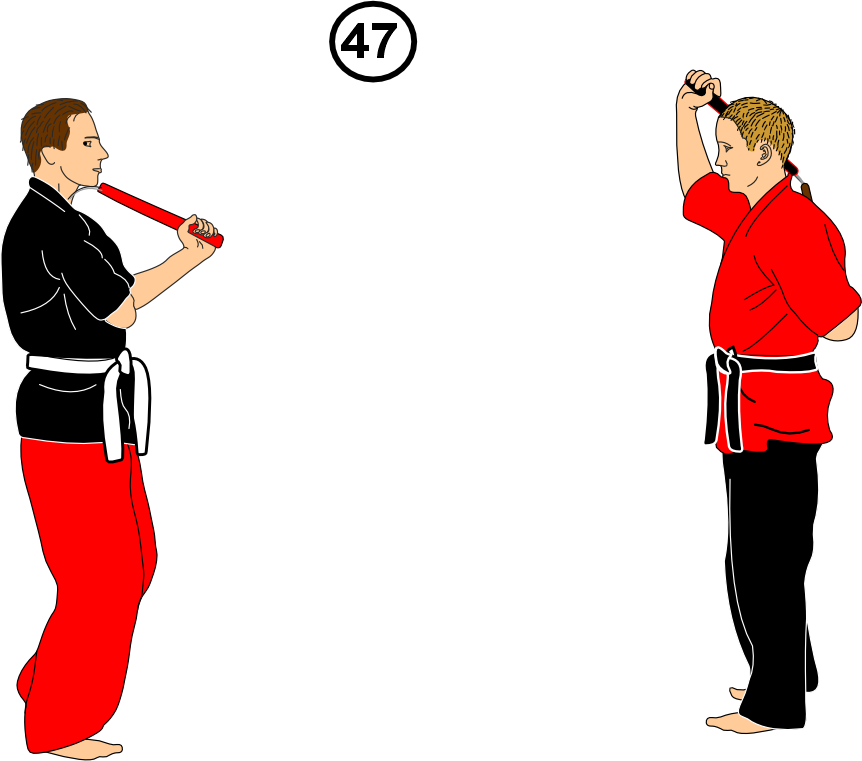
47. You both make a simultaneous forward movement.
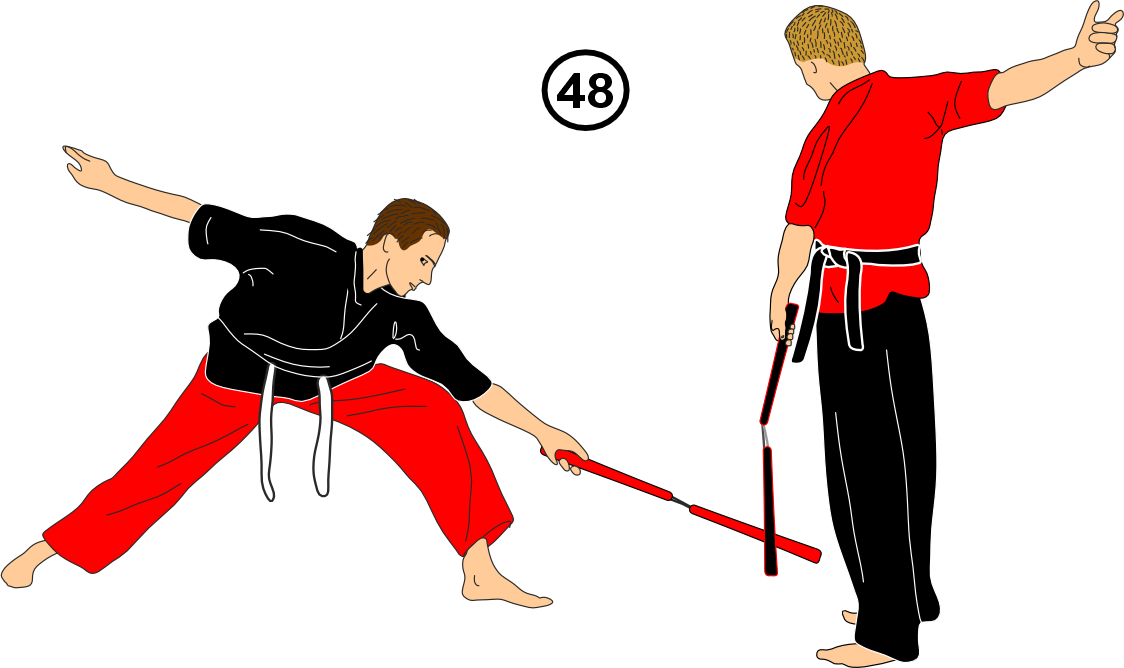
48. He attacks low; you strike low and parry or block his attack with your own nunchaku.
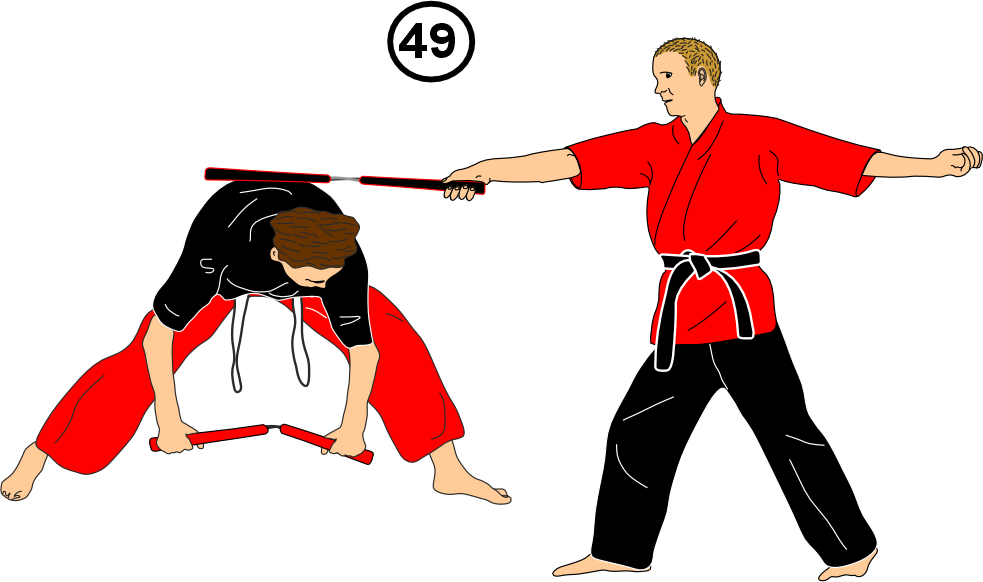
49. You strike and hit your forward-bent opponent.
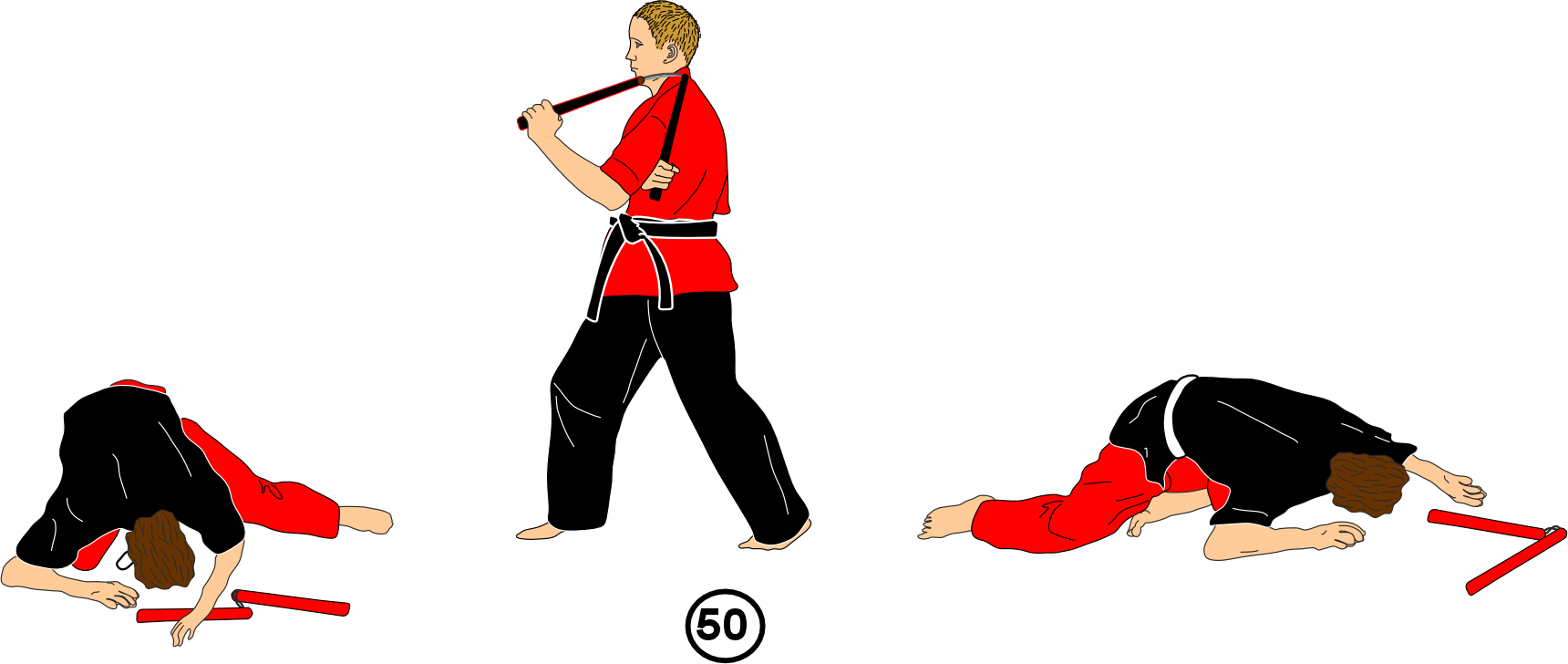
50. You remain standing; your opponents lie defeated on the ground.
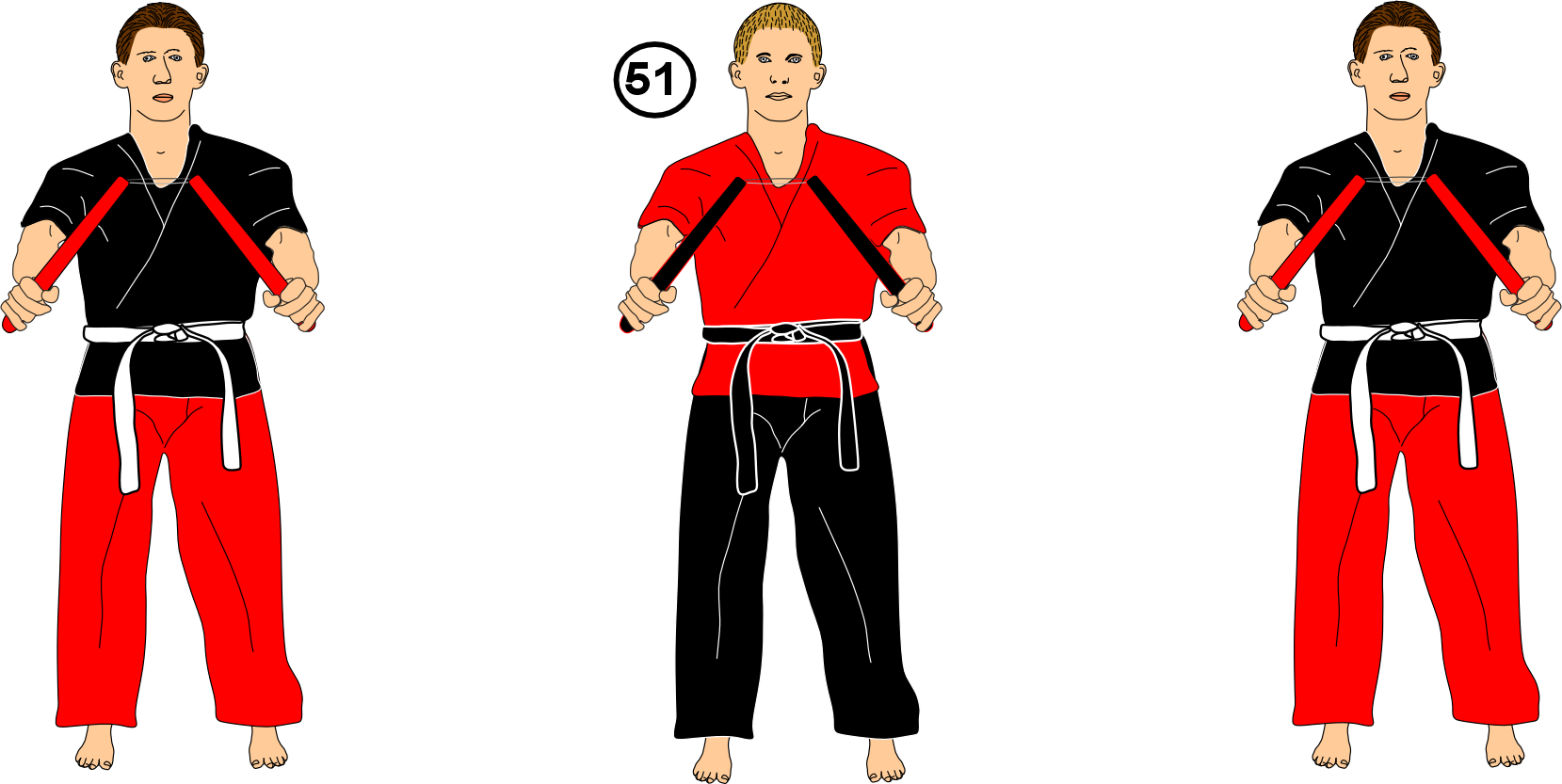
51. Joint salute — end of the presentation.