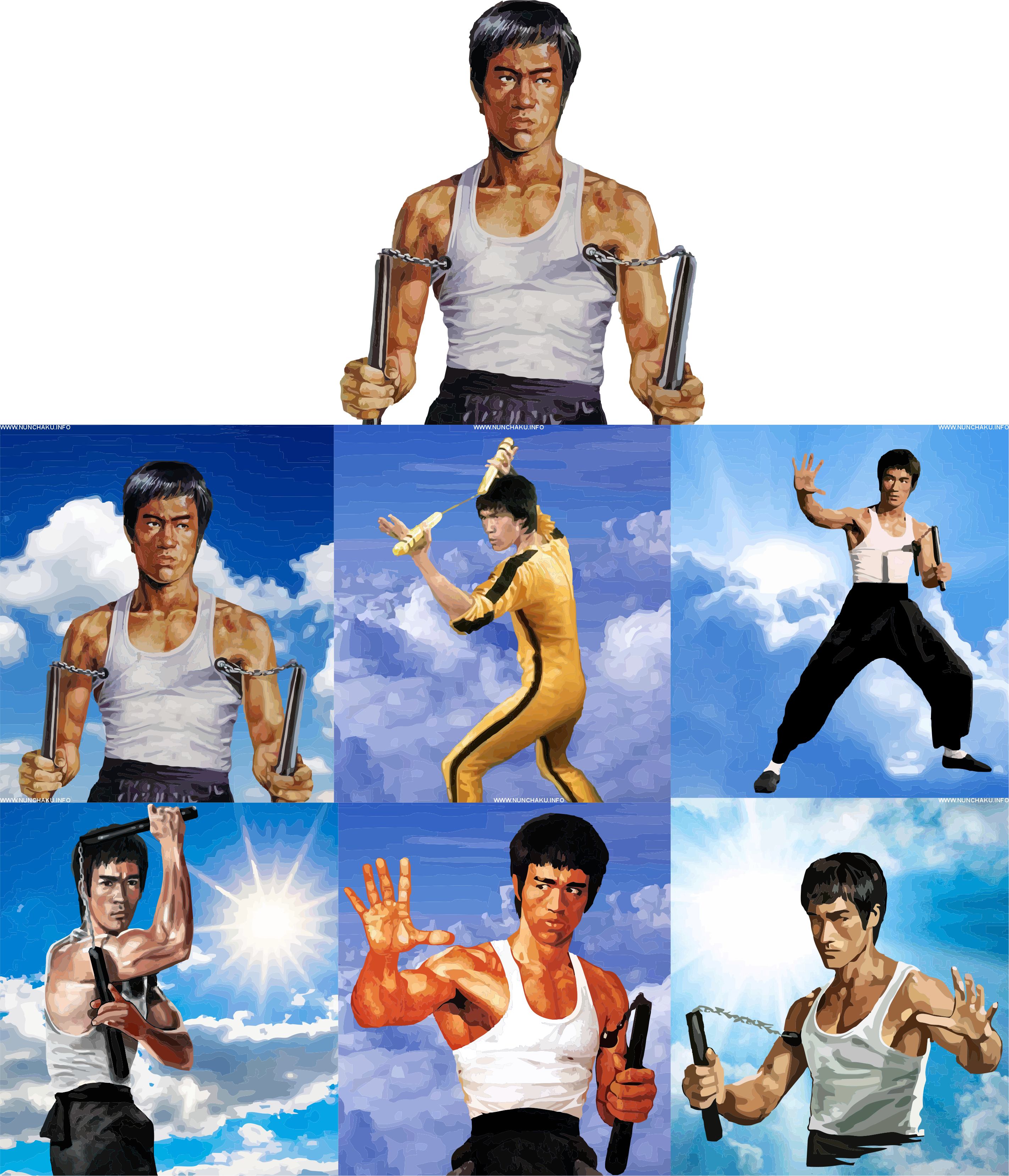
Bruce Lee
Bruce Lee — the original influence
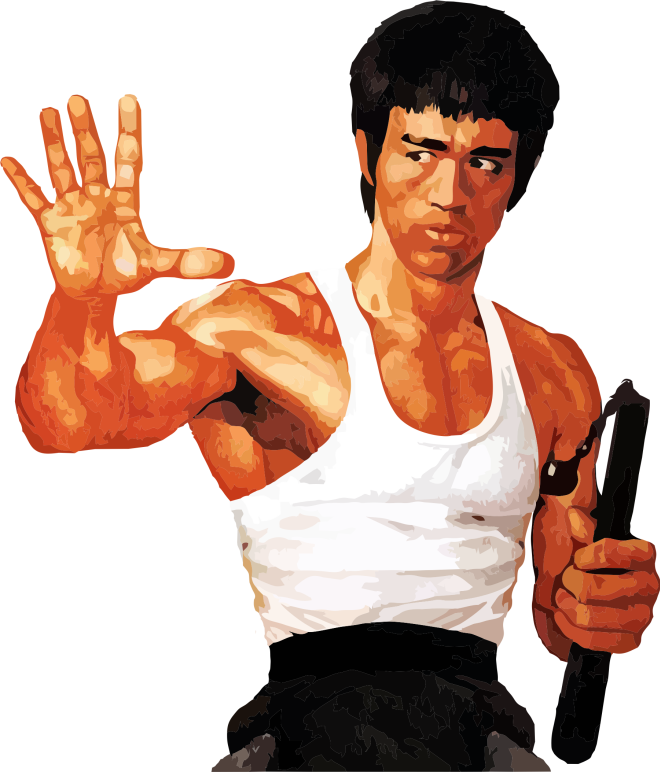
Bruce Lee brought the nunchaku to global recognition through his films, unmatched charisma, and explosive talent. He inspired millions and reshaped how martial arts were presented to the modern world.Yet the same intensity, pressure, and drive that elevated him also became a burden. His life reminds the NC5 practitioner that standing in the spotlight demands balance — and that external success can never replace inner stability. Fame rises and fades.
Without Bruce Lee, the nunchaku would never have crossed the boundary between tradition and the modern world. He did not invent the weapon, but he revealed its spirit: speed, flow, intention and presence. Through his movement, the nunchaku became more than an object — it became an extension of the practitioner.
In his early films, Bruce Lee’s nunchaku work is direct and relatively static. He stands his ground; opponents come to him. The weapon is precise, powerful, and controlled from position. In later films, a clear evolution becomes visible. His footwork opens, movement increases, and the nunchaku begins to travel with him through space. The weapon and the body start to move as one. His final nunchaku performance is of historical importance to combat practice: for the first time, two practitioners face each other with nunchaku. This nunchaku-versus-nunchaku encounter, against Dan Inosanto, marks a turning point — from demonstration to true combat dialogue.
For many, Bruce Lee was the first encounter with the nunchaku. For others, he was the reason to begin.
NC5 stands on that moment of inspiration, not to imitate the form, but to carry its evolution forward — toward understanding, discipline and personal mastery.
Under an open sky, his influence remains. Perhaps this is Nunchaku Heaven.
Study Bruce Lee not only for his brilliance and charisma, but for the lesson his life teaches about balance, pressure, and the true cost of relentless ambition.
Reflect further:
Jeen kun Do