LES POSITIONS DE GARDE Guard positions
Definition of the Guards
The upper hand determines whether the stance is front or rear; this is the hand capable of delivering a strike.
If the upper hand is left and the left leg is positioned forward, this is the avant stance (front).If this leg is placed to the rear, the stance is referred to as the arrière stance (rear).
Upper hand + corresponding leg forward = avant
Upper hand + corresponding leg back = arrière
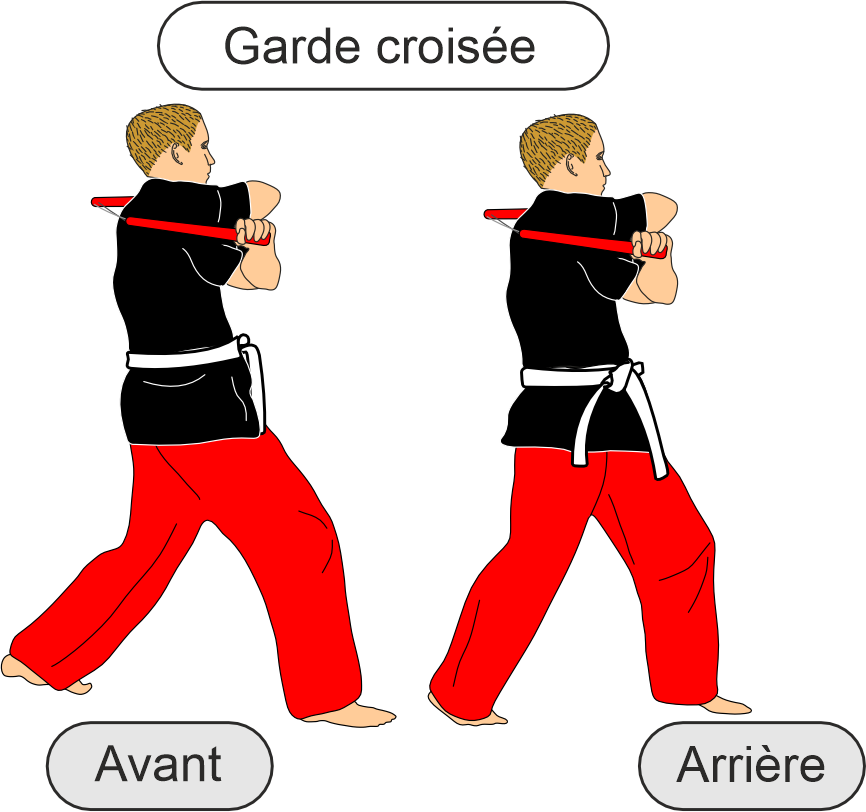
Garde croisée — Avant / Arrière
Cross Guard — Front / Rear
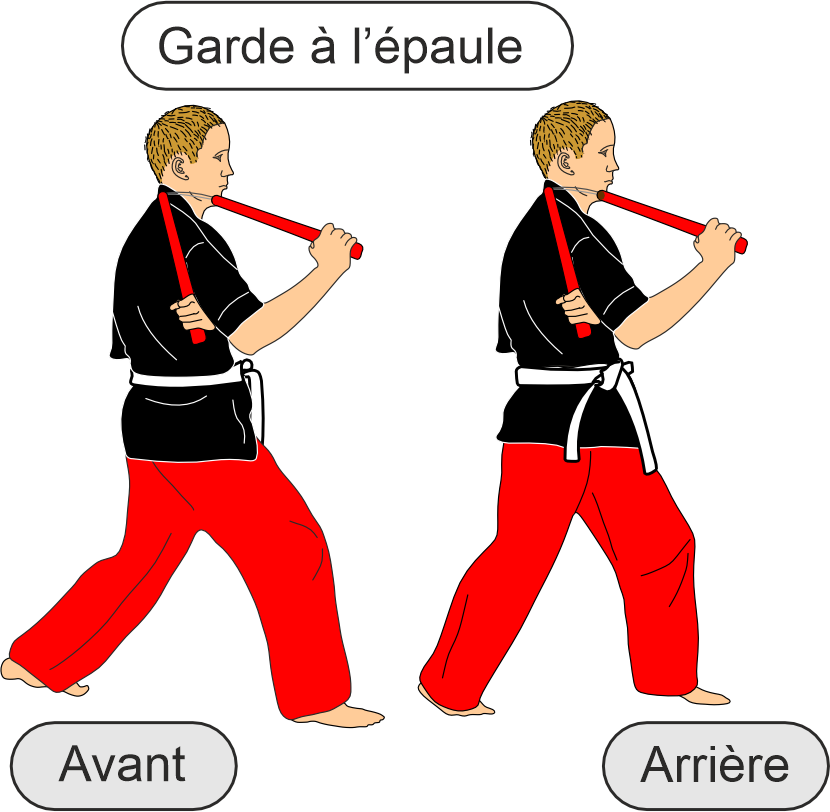
Garde à l’épaule — Avant / Arrière
Shoulder Guard — Front / Rear
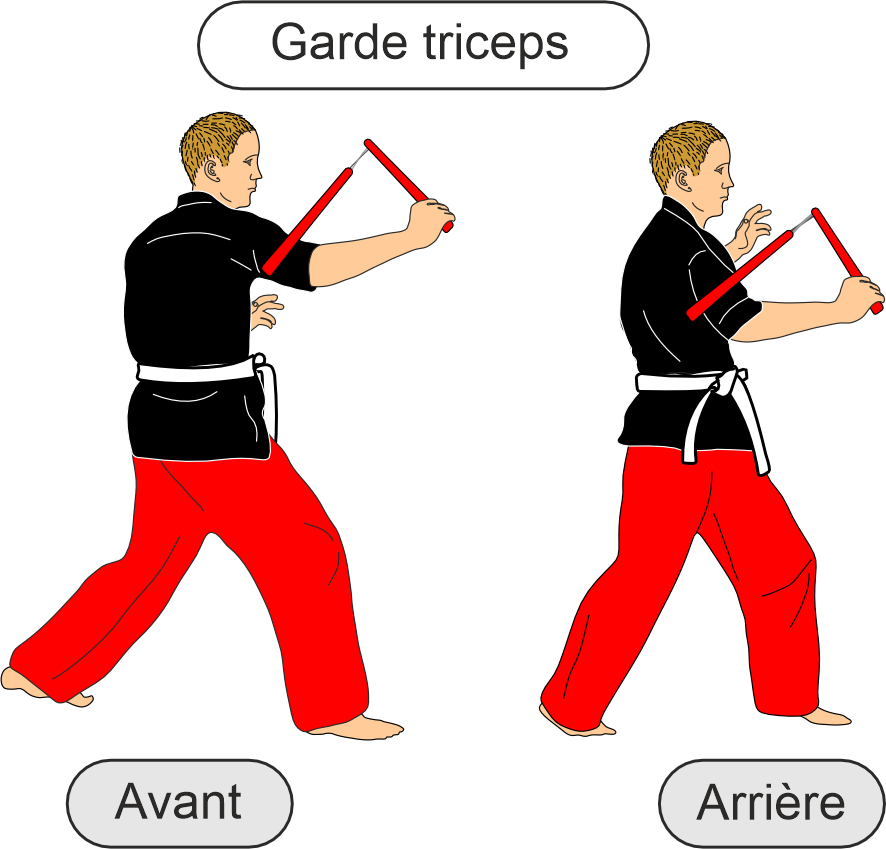
Garde triceps — Avant / Arrière
Triceps Guard — Front / Rear
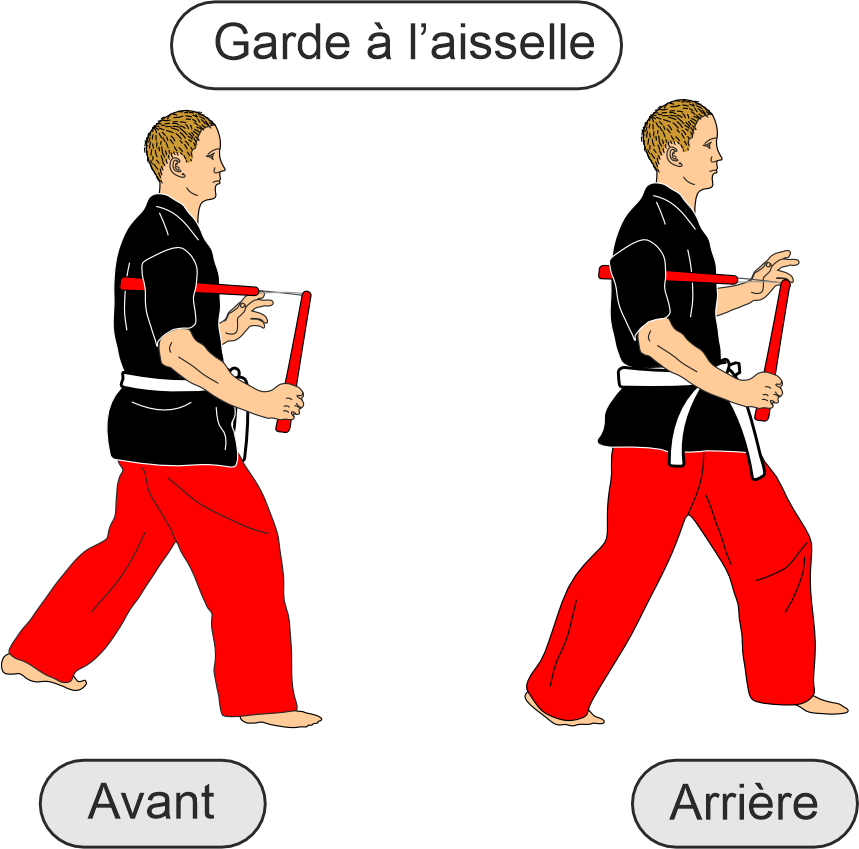
Garde à l’aisselle — Avant / Arrière
Armpit Guard — Front / Rear
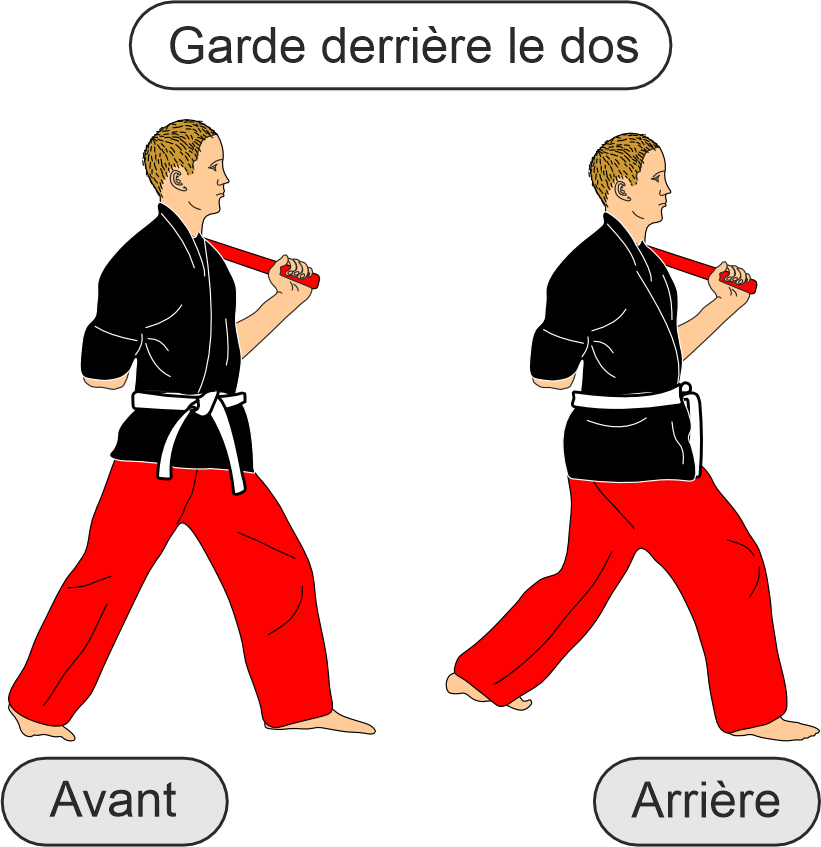
Garde derrière le dos — Avant / Arrière
Behind-the-Back Guard — Front / Rear
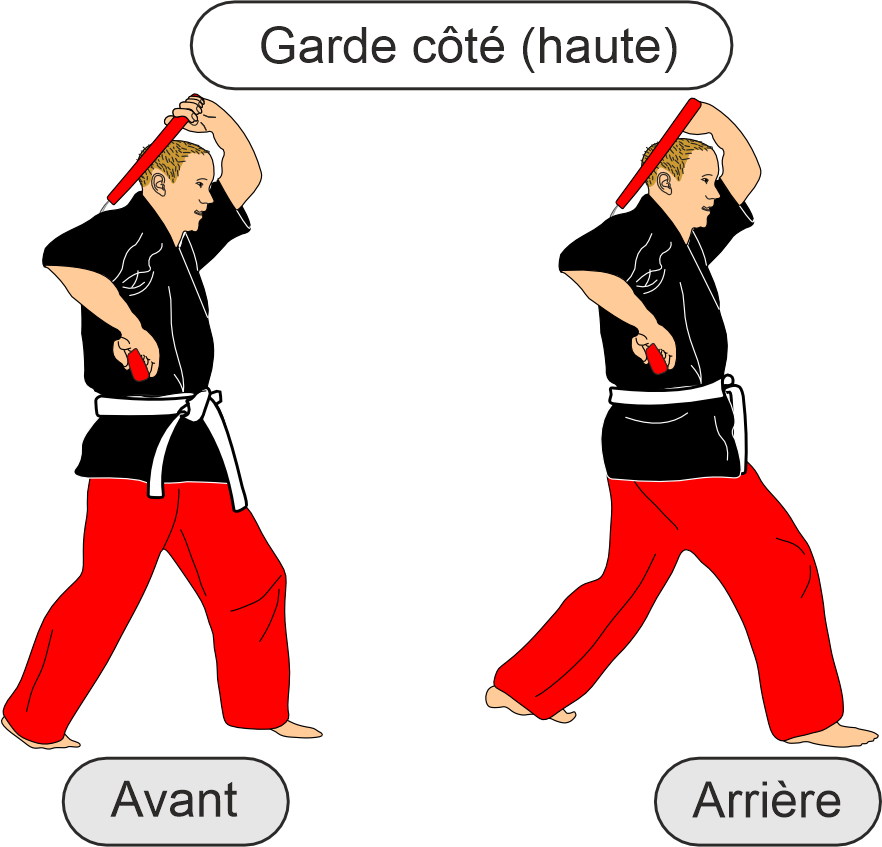
Garde côté (haute) — Avant / Arrière
Side Guard (High) — Front / Rear
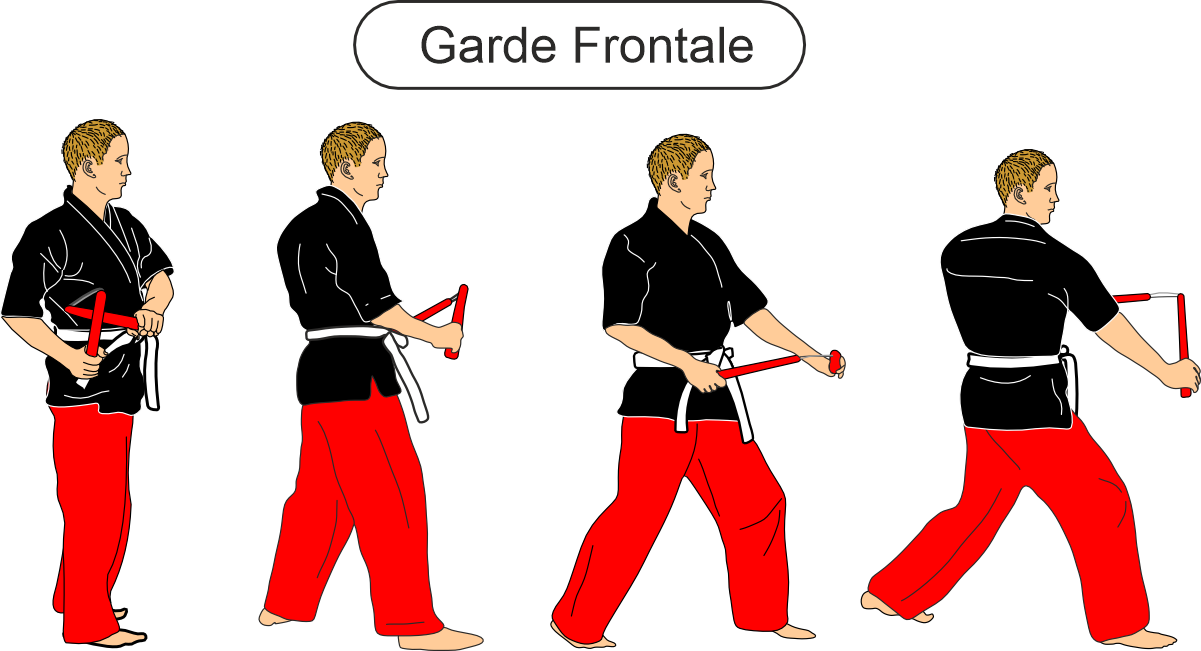
Frontal Guard is a neutral defensive stance or fighting position in which the body is oriented frontally toward the opponent.This guard provides a balanced foundation from which both offensive anddefensive actions can be executed effectively.Due to its symmetrical structure, the practitioner maintains optimal control over balance, distance and mobility. The Frontal Guard allows smooth transitions between attack, defense and repositioning, and is often used as a starting or recovery position within nunchaku combat.